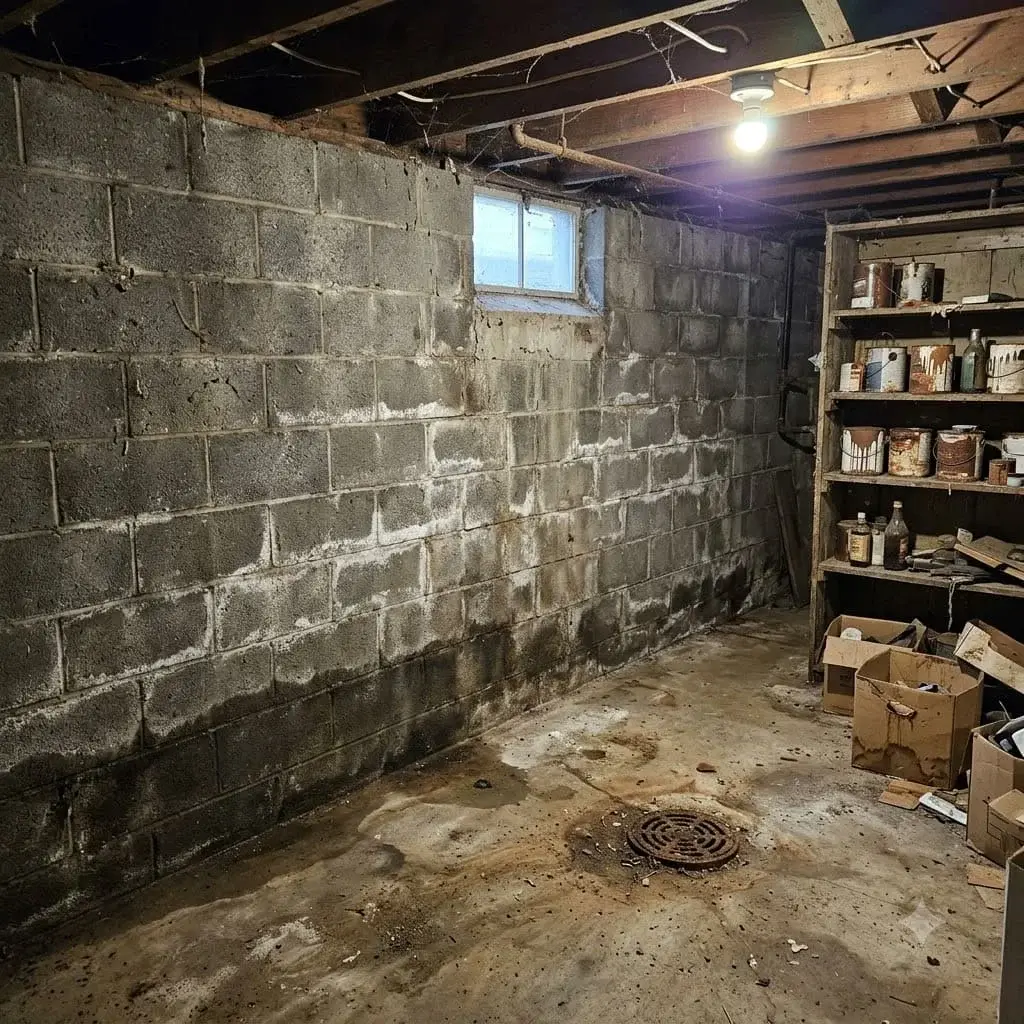
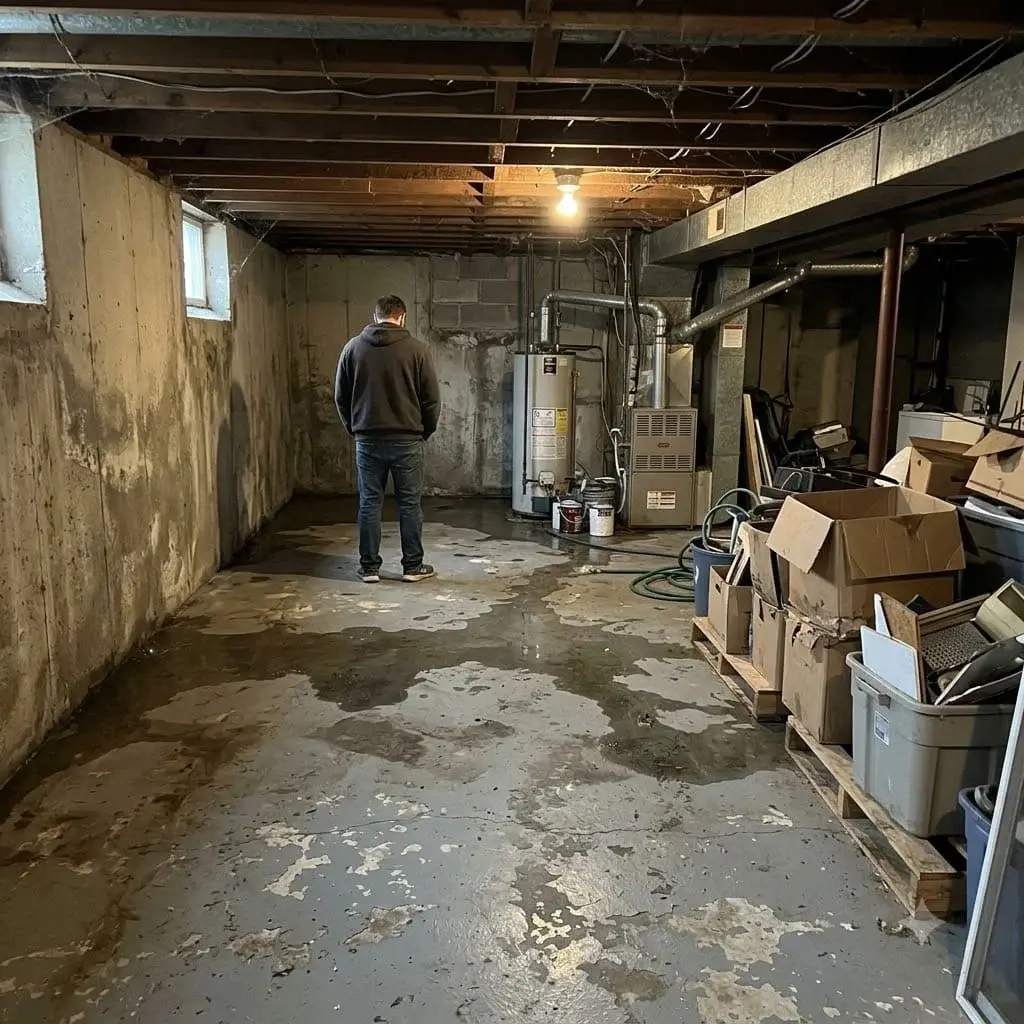
Weather loads the ground all year. The Afton-Janesville weather station records about 37 inches of precipitation and about 37 inches of snowfall in an average year, with snow falling from November into April. March to June is the wet stretch, at about 14.7 inches of precipitation, and June is the wettest month at close to 5 inches. Glacial deposits cover most of Rock County, according to the USGS, and the county's ground water is recharged mainly by local precipitation. That water goes into the ground around your foundation, and the foundation holds the pressure.
Freeze and thaw does the rest. March in Janesville averages a high near 45°F and a low near 25°F, so the ground and the walls cross freezing almost every day. Water that gets into a crack or mortar joint freezes, expands, and opens the gap a little more, and each thaw lets in more water. A hairline crack in fall is often a steady leak by spring.
The houses add to it. Census figures show about 27% of Janesville's occupied homes were built before 1960, and the largest single group, about 28%, went up between 1960 and 1979. Basements from those decades went in before modern drainage, and the block and poured walls of that era take on water through cracks, mortar joints, and the floor-wall seam.
The Rock River adds a risk of its own. In June 2008, the USGS counted Janesville among nine severely damaged southern Wisconsin communities, with the Rock River not peaking until June 21 at Indianford and Afton. We look at the river, the weather, and the foundation together when we inspect. Rock River flooding and Janesville basements