
Service
Interior Drainage and Sump Pump Installation in Janesville, WI
Interior drainage and sump pump installation in Janesville, WI handles the water pressure that builds under about 37 inches of precipitation a year at the Afton-Janesville weather station. Installers set drain tile along the footing, a sump basin below the floor, and a pump with battery backup. It is the method most Janesville basements run on, because it works from inside the house in any season. Call 608-740-5923 to reach a local provider.
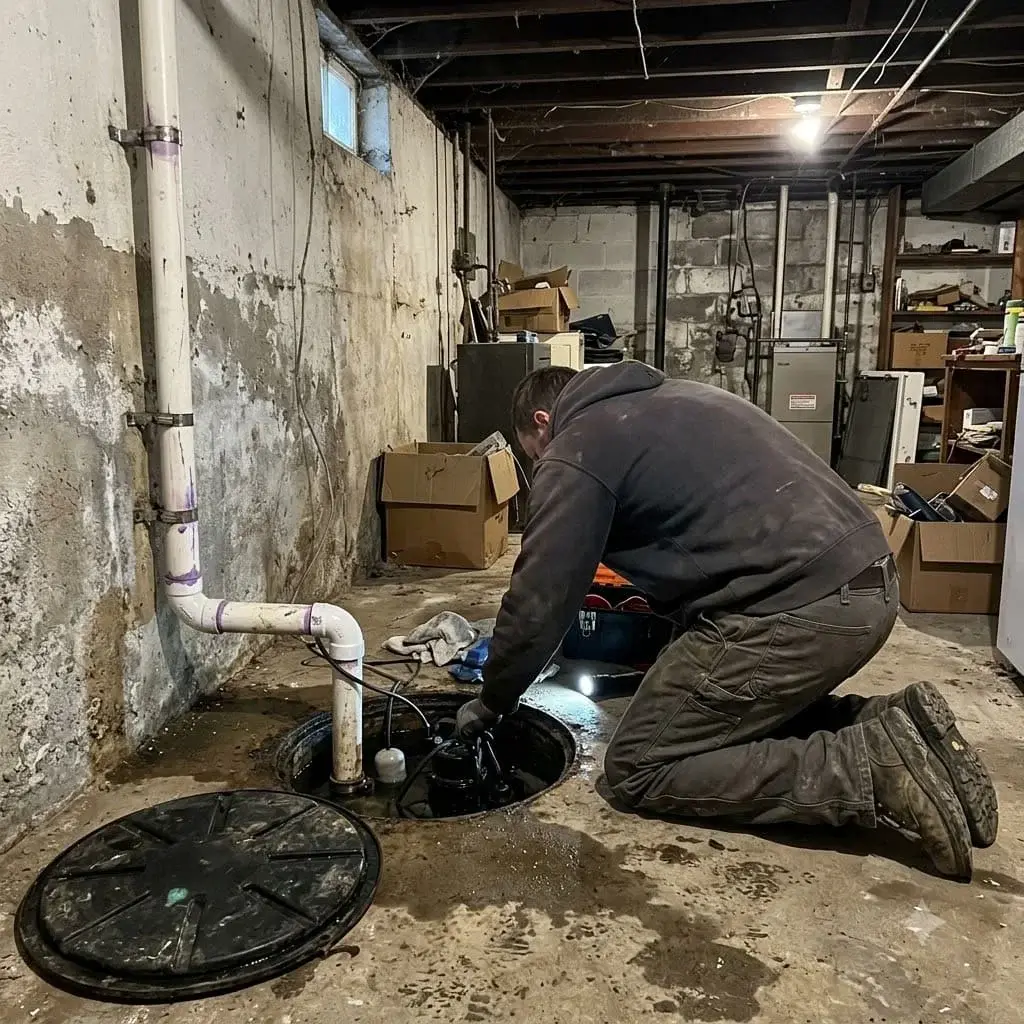
What Interior Drainage Does for a Janesville Basement
Interior drainage collects water at the base of the wall and moves it out before it reaches the floor. Water pressure in saturated ground pushes that water through the floor-wall seam, through mortar joints, and through cracks. The method does not try to block the water at the surface. It gives the water a channel and a pump, which takes the pressure off the wall.
It fits both block and poured concrete walls. The work happens inside the house, so nothing gets dug up in the yard, and it goes in during a frozen Wisconsin winter as readily as in June. Call 608-740-5923.
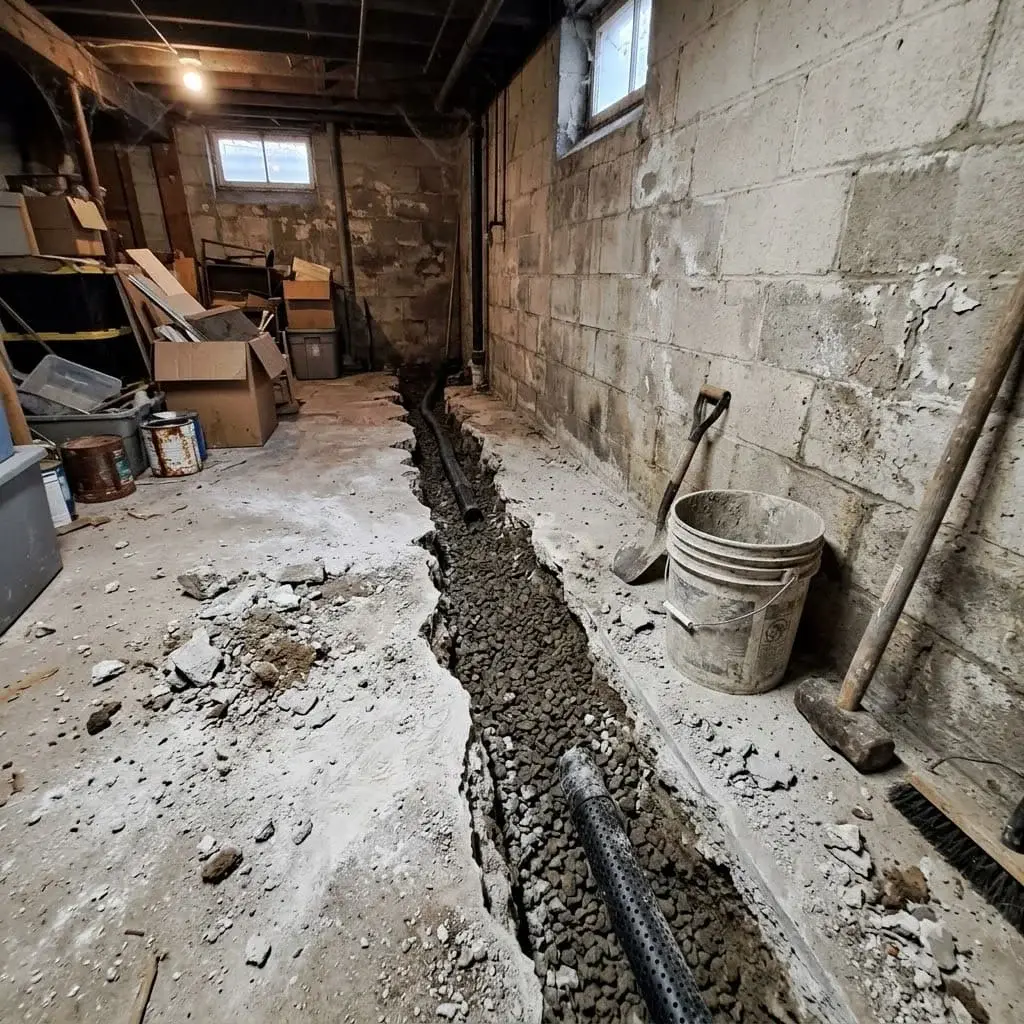
What Gets Installed
A drainage channel along the footing. A strip of slab beside the wall comes up, perforated pipe goes into gravel, and the floor gets patched over it. Water at the floor-wall seam drops into the pipe instead of spreading across the basement.
The sump basin and pump. The pipe runs to a basin below the floor, and the pump sends the water out through a discharge line to the yard, away from the foundation.
A battery backup. A storm heavy enough to flood a basement cuts the power, and a standard pump stops when the power does. The backup pump runs on its own battery. This guide to sump pump failure and battery backup covers why pumps stop and how to test one.
Weep holes in block walls. Block is hollow, and water collects inside the cores. Weep holes in the bottom course let that water drain into the system instead of sitting in the wall.
Work is performed by independent professionals. Call 608-740-5923 to reach an interior drainage provider in Janesville.
How it works
How Interior Drainage Gets Installed
First, a provider inspects the basement and marks where water enters.
Second, the slab comes up along the wall that needs drainage and the pipe goes into gravel.
Third, the sump basin and pump go in and the discharge line runs outside.
Fourth, the battery backup goes on and, on block walls, the weep holes get drilled.
Finally, the patch goes down and the pump gets tested with water to confirm the discharge moves it away from the house.
Call 608-740-5923 to reach a local provider.
Why Janesville Basements Need It
Janesville basements need interior drainage because the ground around them stays loaded for much of the year. The Afton-Janesville weather station records about 37 inches of precipitation and about 37 inches of snow in an average year, and March through June adds about 14.7 inches. That water soaks the ground around a foundation, and the pressure finds the weakest point. About 28% of the city's occupied homes were built between 1960 and 1979, and another 27% before 1960, so many basements rely on walls and floor joints that were never sealed.
Storm runoff is the other load. When flash flooding hit Janesville on April 17, 2026, storm runoff flowed into basements across the city. A drain and a pump sized to the water give that water somewhere to go. For the local picture, see Rock River flooding and Janesville basements. Call 608-740-5923.
When Interior Drainage Is the Right Call
Interior drainage is the right call when water gathers at the floor-wall seam, seeps through the base of a block wall, or comes up through the floor after rain or snowmelt. It is the least disruptive of the three methods.
It is not the answer for every wall. Water coming through the face of the wall, or a failed footing drain, points to exterior waterproofing, and a wall that has cracked or started to bow needs wall repair. This guide to interior vs exterior waterproofing lays out how the choice gets made. Call 608-740-5923.
What to Look for in a Janesville Sump Pump Installer
- Drain tile along the footing, not just a pit. A single basin in the corner collects what reaches it. Pipe along the footing collects the water before it crosses the floor.
- Weep holes on block foundations. Block walls hold water in the cores, and an installer who skips the weep holes leaves that water in the wall.
- A battery backup included in the scope. Confirm it is in the written scope rather than offered as an afterthought.
- A discharge line that ends away from the house. A line that dumps beside the foundation sends the same water back into the ground it came from.
- A pump sized to the water. The basin, the pump, and the discharge have to match what the foundation actually takes on.
- License and insurance you verify yourself. Ask for the license number and a current certificate of insurance, then confirm the license with the Wisconsin Department of Safety and Professional Services and the policy with the carrier named on it.
Call 608-740-5923.
Frequently asked
Frequently Asked Questions
Does interior drainage stop a basement from leaking?
Interior drainage stops water from reaching a basement floor by collecting it at the base of the wall and pumping it outside. It takes the pressure off the floor joint and the block weep holes, which is where most Janesville basement water shows up. It does not change what happens in the soil outside. A wall that leaks through its face or has cracked also needs exterior waterproofing or wall repair.
Do I need a battery backup sump pump?
A battery backup is the most important addition to a sump system, because a storm heavy enough to flood a basement also cuts the power. A standard pump stops when the power does, and the basement fills at the moment the pump matters most. The backup runs on its own battery and keeps pumping until power returns. Confirm it appears in the written scope.
Will interior drainage work on block walls?
Interior drainage works on block walls when weep holes are drilled in the bottom course. Block is hollow, so water collects inside the cores and weeps out through the mortar joints. The weep holes let that water drain into the pipe along the footing instead of sitting in the wall. Block foundations are common in Janesville homes built from the 1960s on, so this step matters across the city.
Can interior drainage be installed in winter?
Interior drainage installs in any season, because the work happens inside the basement and does not depend on thawed ground. That matters in Janesville, where the weather station records about 37 inches of snow a year and March crosses freezing nearly every day. A basement leaking during snowmelt does not have to wait for spring for the work to start.
How long does a sump pump last?
A sump pump has a service life measured in years of running, not calendar years, so a pump in a wet Janesville basement that cycles through every spring melt wears faster than one that rarely starts. Testing it with a bucket of water before each spring shows whether the float, the motor, and the discharge still work together. A pump that fails a test needs service before the next wet season.
Call Now for Interior Drainage in Janesville
For interior drainage and a sump pump in Janesville, call 608-740-5923 to reach a local provider. You can also use the contact page or start from the Janesville basement waterproofing page.