Service
Basement Wall Repair for Cracked and Bowing Walls in Janesville, WI
Basement wall repair in Janesville, WI covers cracked, leaning, and bowing block and poured walls on foundations that cross freezing almost every day in March. Crack injection seals a stable crack that leaks. Carbon-fiber straps and wall anchors hold a wall that has started to move. The method follows how far the wall has gone out of plumb. Call 608-740-5923 to reach a local provider.
What Pushes a Basement Wall
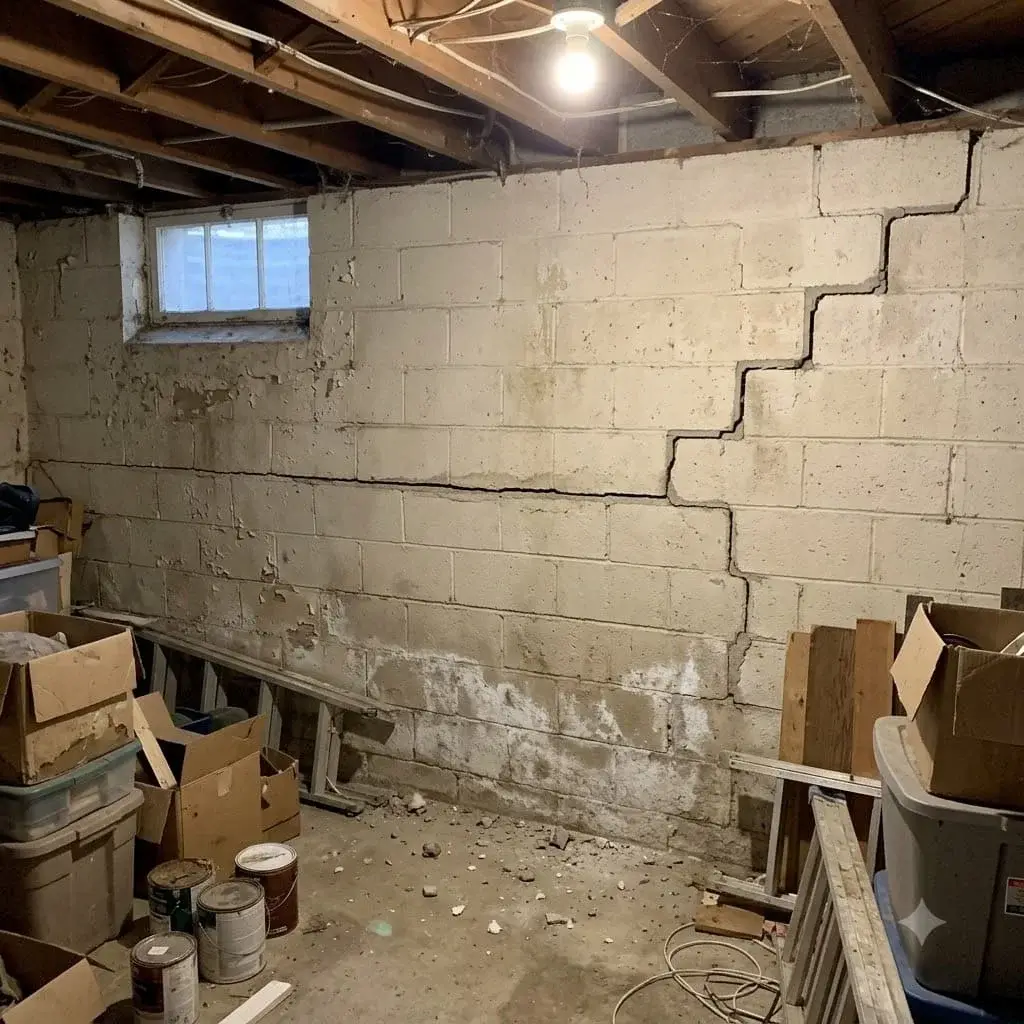
Soil and water press on a basement wall from the outside, and a wall that was not built to carry that load moves. Saturated ground adds weight and pressure. Frozen soil expands against the wall in winter. Water in a crack or mortar joint freezes, expands, and opens the gap a little more, then lets in more water at the thaw.
The Afton-Janesville weather station records about 37 inches of precipitation and about 37 inches of snow in an average year, and March averages a high near 45°F and a low near 25°F. A Janesville wall goes through that cycle every spring.
Walls built before modern drainage are the most exposed. About 28% of Janesville's occupied homes were built between 1960 and 1979, and about 27% before 1960. Many of those basements have block or poured walls with no working drain behind them. Call 608-740-5923.
Signs a Wall Needs Repair
The signs a wall needs repair follow a recognizable pattern:
- A horizontal crack across a block wall, often near the middle of the wall's height
- A stair-step crack following the mortar joints in block
- A wall that bows or leans into the basement
- Gaps opening between the wall and the floor or the ceiling joists
- A crack that widens or lengthens over a season
- Water coming through a crack after rain or snowmelt
A hairline vertical crack in a poured wall comes from the concrete curing, and it needs sealing rather than structural work. A horizontal or stair-step crack, or any wall that has moved, signals lateral pressure. Call 608-740-5923.
Basement Wall Repair Methods
Crack injection. For a stable crack that leaks, a sealant injected into the crack fills and bonds it from the inside. It stops the water through that crack and leaves the wall as it stands.
Carbon-fiber straps. For a wall that has begun to bow, carbon-fiber straps bonded to the wall surface hold it against further movement. They are thin, and they leave the basement usable.
Wall anchors. For a wall that has moved further, anchors connect the wall to stable soil outside and hold it in place. The choice between straps and anchors follows how far the wall has moved and what sits behind it.
Repair paired with drainage. A wall that moved under water pressure keeps moving unless the pressure drops. Interior drainage or exterior waterproofing goes in where the water is the cause.
Work is performed by independent professionals. Call 608-740-5923 to reach a wall repair provider in Janesville.
How a Wall Repair Is Decided
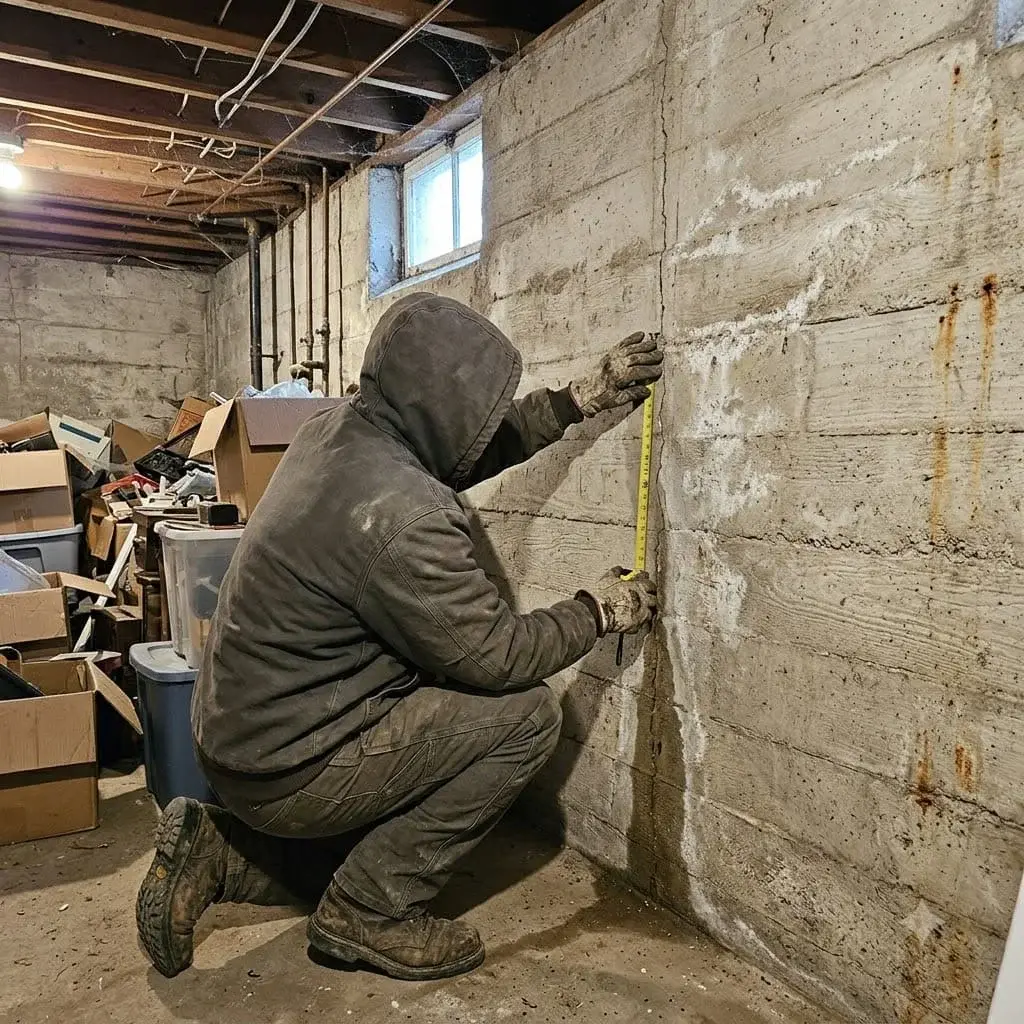
First, a provider measures the wall, marks the cracks, and checks how far the wall has moved from plumb. Second, the soil, the drainage, and the water outside get examined to find what is pushing it. Third, the method that holds the wall and puts the right drainage behind it gets chosen. Finally, the plan and the scope go in writing, with the measurements and the reasoning for the method included.
Call 608-740-5923 to reach a local provider.
Why Repair Matters More After Heavy Water
Wall movement and water go together. On April 17, 2026, flash flooding sent storm runoff into Janesville basements, and saturated ground puts the most pressure a foundation wall ever carries. A crack that stayed dry before a big storm leaks after it.
A wall that has cracked or shifted since heavy water needs measuring before the next wet spring, because the next freeze-thaw season works on the gap the storm opened. This guide to basements in Janesville's 1960s and 1970s homes covers what walls of that era do. Call 608-740-5923.
What to Look for in a Janesville Foundation Repair Contractor
- A plumb measurement, not an eyeball. The scope should state how far the wall has moved and where it was measured, so the next inspection has a baseline.
- The cause identified, not just the crack. A repair that ignores the water pressure behind the wall leaves the force that moved it in place.
- Drainage included where water is the cause. Ask whether the scope pairs the structural repair with interior or exterior drainage.
- The method matched to the movement. Injection for a stable crack, straps for a modest bow, anchors for a wall that has moved further. A contractor who installs one method on every wall is not measuring.
- A warranty in writing. It states what is covered, for how long, what voids it, and whether it passes to the next owner.
- License and insurance you verify yourself. Ask for the license number and a current certificate of insurance, then confirm the license with the Wisconsin Department of Safety and Professional Services and the policy with the carrier named on it.
Call 608-740-5923.
Frequently asked
Frequently Asked Questions
Are cracks in my basement wall serious?
A crack is serious when it runs horizontally, follows the stair-step of block mortar joints, widens over time, or sits in a wall that bows or leans. Those signs point to lateral pressure from soil and water. A thin vertical crack in a poured wall comes from concrete curing and may only leak. Measuring the wall's movement separates a cosmetic crack from a structural one.
How do you fix a bowing basement wall?
A bowing basement wall gets fixed by holding it against further movement and lowering the pressure behind it. Carbon-fiber straps bonded to the wall handle walls that have bowed a modest amount. Wall anchors tied to stable soil outside handle walls that have moved further. Either one pairs with drainage, because a wall that moved under water pressure keeps moving if the water stays.
Can a cracked basement wall be repaired without digging?
Crack injection and carbon-fiber straps both go on from the basement side, so they need no digging, and interior drainage can go in to relieve the water pressure. Wall anchors connect to stable soil outside the wall, so they need access outside. A wall that has failed badly may need excavation as part of the plan, and the written scope states which applies.
Will waterproofing stop my wall from cracking again?
Waterproofing lowers the water pressure that cracks and bows walls, so it reduces the chance of new movement. It does not repair a wall that has already moved. A complete job does both: seal the crack or stabilize the wall, and add drainage so the load behind the wall drops. A wall repaired without addressing the water can move again.
How much can a basement wall bow before it has to come out?
A block wall that has bowed far enough to lose its bearing, or one where the courses have sheared along a horizontal crack, reaches the point where straps and anchors no longer hold it and rebuilding becomes the option. The threshold depends on the wall's height, thickness, and how much of the movement is concentrated at one course. A plumb measurement against the wall's height is what establishes it.
Call Now for Basement Wall Repair in Janesville
For basement wall repair in Janesville, call 608-740-5923 to reach a local provider. You can also use the contact page or start from the Janesville basement waterproofing page.