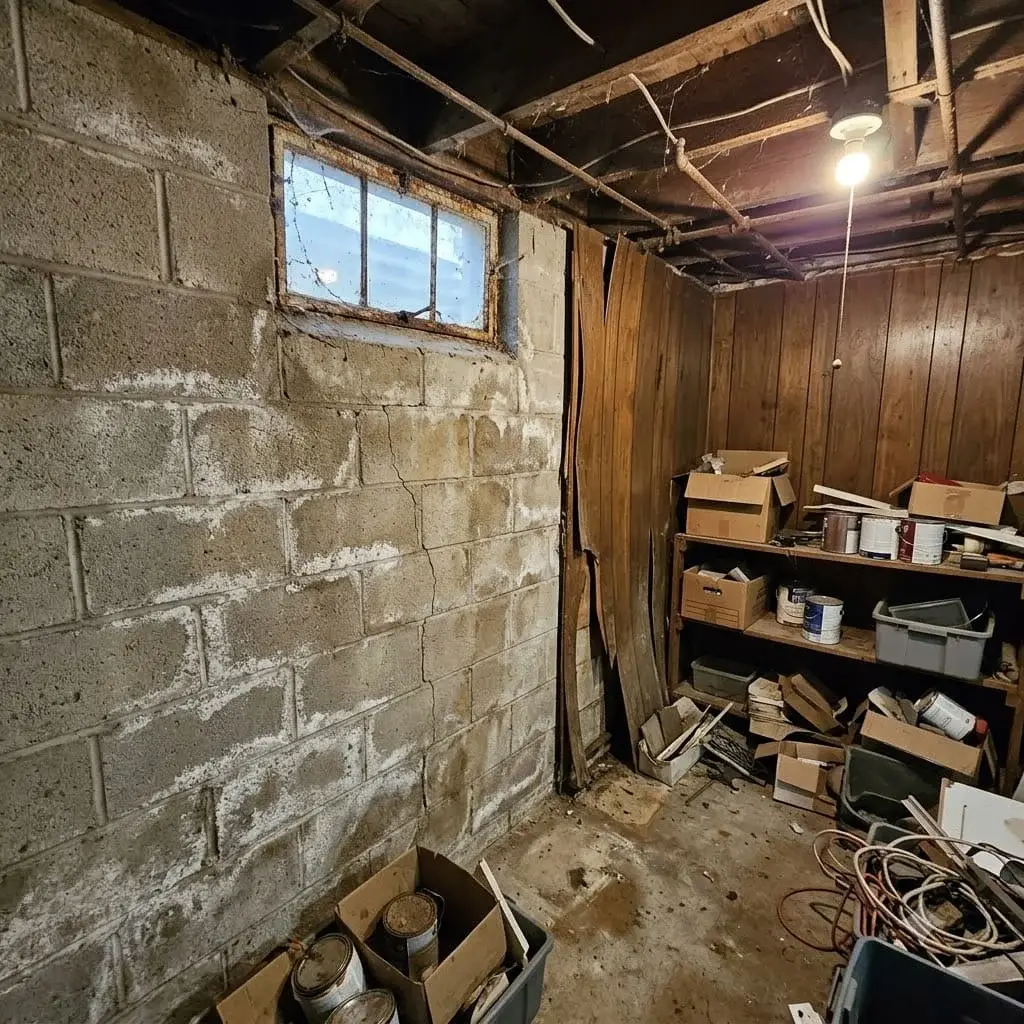
About 28% of Janesville's occupied homes, 8,298 of 29,204, were built between 1960 and 1979, making that the largest single group in the city, according to the Census Bureau's American Community Survey. Another 27% date to before 1960. That mix means a lot of Janesville basements went in before modern drainage, and the problems they have are predictable.
Janesville's Housing at a Glance
Janesville's housing is not one era. The Census Bureau's American Community Survey breaks the city's occupied homes down this way.
| Built | Share of occupied homes |
|---|---|
| 1939 or earlier | About 12% |
| 1940 to 1959 | About 15% |
| 1960 to 1979 | About 28% |
| 1980 to 1999 | About 22% |
| 2000 or later | About 22% |
About 27% were built before 1960 and about 56% before 1980. These are survey estimates with margins of error, so read them as a picture of the housing rather than an exact count. The point for a basement owner is that more than half the city's homes predate 1980, and many of those basements were built when waterproofing came second.
How Basements Were Built in That Era
Basements of that era were built to hold the house up, and keeping water out came second. Concrete block and poured concrete were both common.
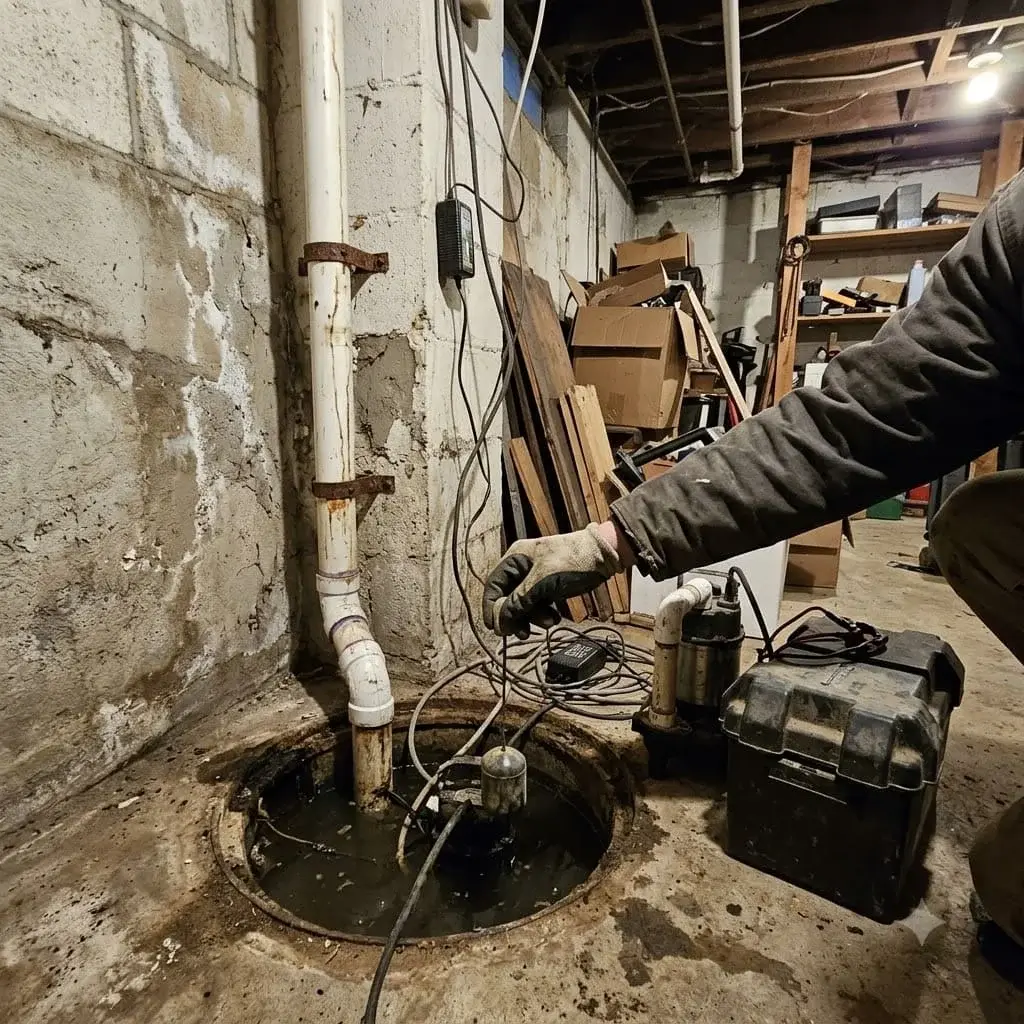
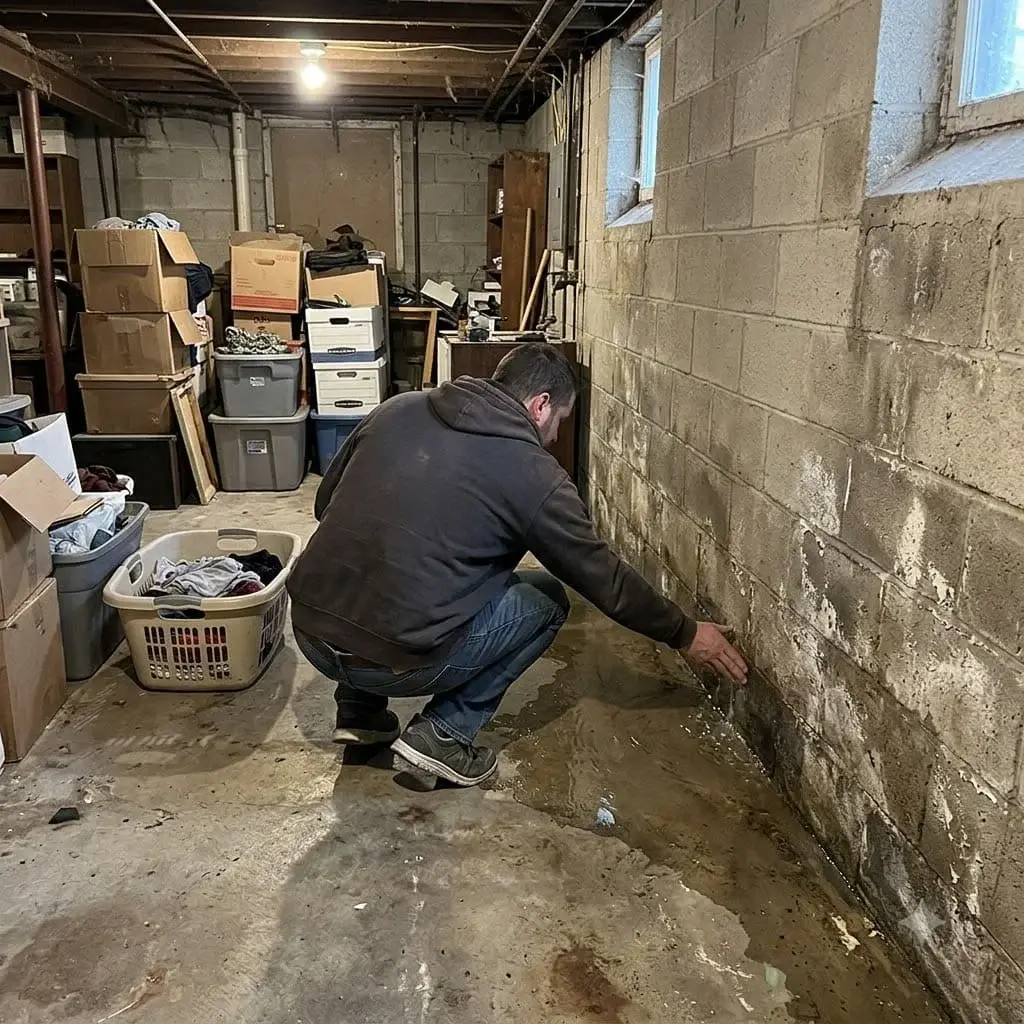
Block walls are hollow and porous, and water seeps through the mortar joints and collects inside the cores. Poured walls resist water better and crack as they age, letting water in through the cracks and at the seam where the wall meets the floor. Many of these basements had little or no drainage along the footing and no sump pump, or a single pit in the corner meant for occasional water.
Common Problems in These Basements
Basements from this era show a recognizable set of issues.
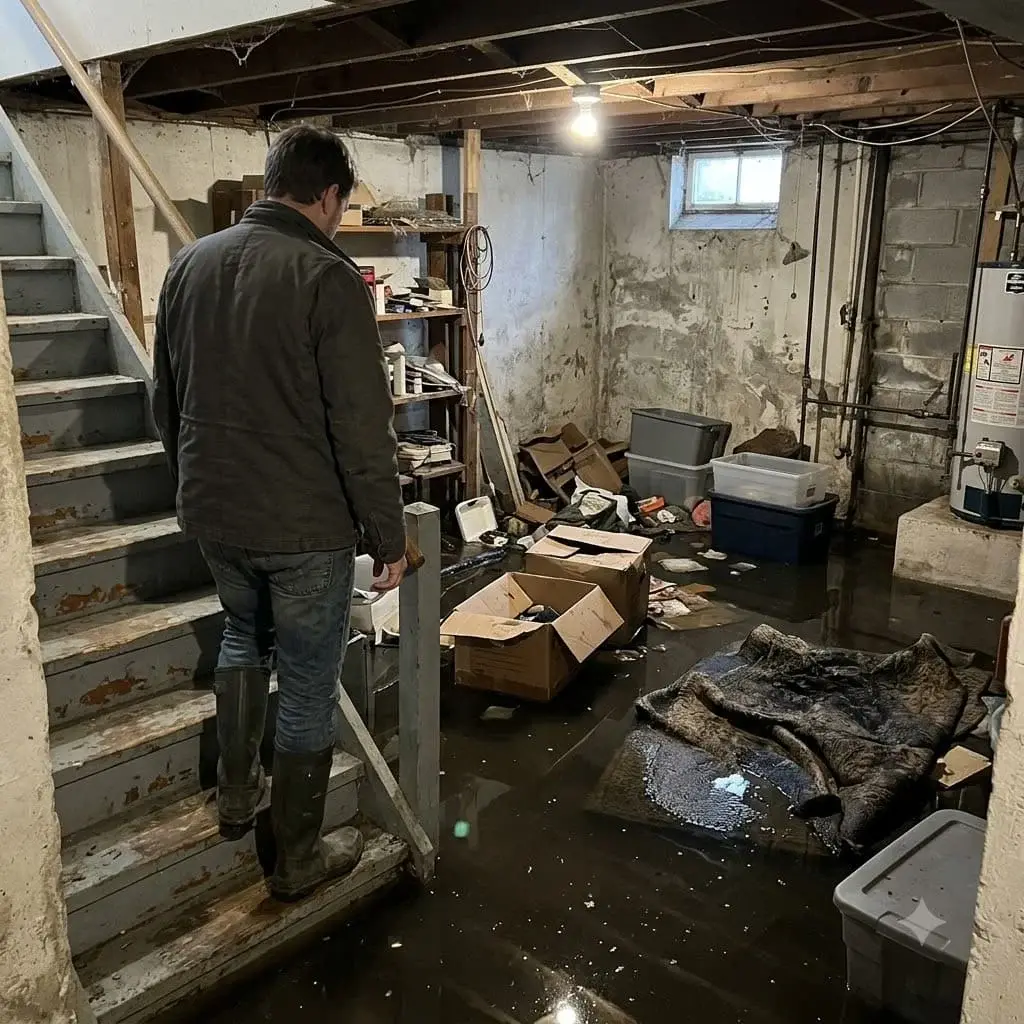
- Water at the floor-wall seam after heavy rain or snowmelt
- Efflorescence, the white chalky residue on block and concrete where water has moved through
- Cracks, horizontal, vertical, or stair-step, that widen over time
- A musty smell from humidity held in porous masonry
- Aging sump systems, with a single pump, no battery backup, or a pump that has worn out
- Window wells that fill and leak
None of these mean the house is failing. They mean the basement is doing what basements of that era do when the ground around them takes on water.
What the Weather Does to Them
The Afton-Janesville weather station records about 37 inches of precipitation and about 37 inches of snow in an average year. March through June brings about 14.7 inches of precipitation, and March crosses freezing almost every day, with an average high near 45°F and a low near 25°F.
That combination puts a lot of water and a lot of freezing on walls that were never sealed. A hairline crack in fall becomes a steady leak by spring. The April 17, 2026 flash flood sent storm runoff into Janesville basements, and walls with no drainage behind them took that hardest. For the freeze-thaw side, read this guide to spring snowmelt and freeze-thaw.
What Works on These Basements
Managing the water works better than coating the wall. Surface sealers and waterproofing paint fail on block and older concrete because they cannot relieve the pressure behind the wall.
Interior drainage with a sump pump and battery backup collects water at the footing and pumps it out, and weep holes let water inside block walls drain into it. Walls that have cracked or started to bow need wall repair, paired with drainage so the load behind the wall drops. A wall leaking through its face, or sitting above a failed footing drain, needs exterior waterproofing. Call 608-740-5923 to reach a local provider.
Frequently Asked Questions
Why does my 1960s or 1970s basement leak?
A basement from that era leaks because it was built with little drainage, and water pressure from saturated ground pushes through block joints, cracks, and the floor-wall seam. About 28% of Janesville's occupied homes were built between 1960 and 1979, and many have block or poured walls with no footing drain and one basic pump. The leak marks where water found the weak points.
Is a damp basement normal in an older home?
A damp basement is common in an older home, because the walls were never sealed and the ground around them takes on water in wet weather. It is normal in the sense that it is expected, and it is not something a homeowner has to live with. Interior drainage and a dehumidifier keep a basement from the 1960s or 1970s dry and usable, and wall repair handles walls that have moved.
Can a block foundation be waterproofed?
A block foundation stays dry by managing the water rather than by coating the wall. Block is hollow and porous, so a surface sealer cannot hold back the pressure. Weep holes in the bottom course let water inside the block drain into an interior system along the footing, and a sump pump sends it outside. That approach works however porous the block is. Cracked or bowing block needs wall repair as well.
What does the white powder on my basement wall mean?
White chalky powder on block or concrete is efflorescence, mineral residue left where water has moved through the wall and evaporated. It marks a path water has taken, and it shows moisture is getting in even when the wall looks dry. The powder is a symptom. Scrubbing it off does not stop the water, and drainage that lowers the pressure behind the wall does.
Will fixing my basement increase my home's value?
Fixing a wet basement protects a home's value, because it removes a problem buyers and inspectors flag. A dry, usable basement adds functional space, and it prevents the water damage, mold, and wall movement that lower a home's value over time. A documented drainage system with a battery backup is a selling point in a city where more than half the homes predate 1980.
Own a Janesville Home From This Era?
If a 1960s or 1970s Janesville basement leaks, smells musty, or has cracks that keep widening, call 608-740-5923 to reach a local provider. See the page on basement waterproofing in Janesville for how each method works.