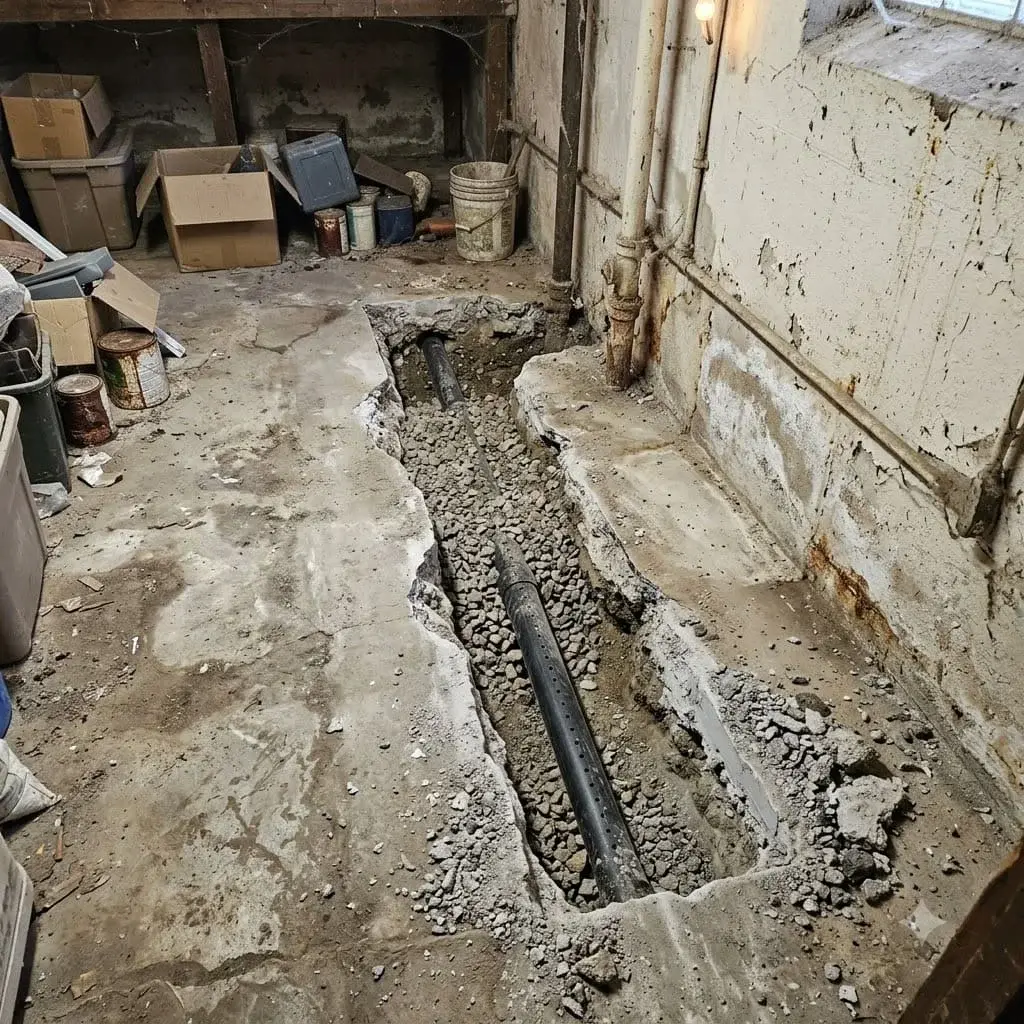
Interior waterproofing runs roughly $3,000 to $12,000 and exterior waterproofing roughly $7,000 to $18,000, according to 2026 national cost guides, and which one a home needs depends on where the water comes in. Interior drainage collects water inside at the base of the wall and pumps it out. Exterior waterproofing seals the wall from outside and replaces the drain. Here's how they compare and how we choose.
The Short Answer
Interior drainage handles water that reaches the floor. Exterior waterproofing stops water before it reaches the wall. If water gathers at the floor-wall seam or seeps through the base of block walls, interior drainage is usually the right call. If water comes through the face of the wall or a footing drain has failed, exterior work is. Many homes need only the interior system. A few need both, or wall repair on top.
Side by Side
| Interior drainage and sump pump | Exterior waterproofing | |
|---|---|---|
| What it does | Collects water at the footing inside and pumps it out | Seals the wall from outside and installs a footing drain |
| National cost range (2026) | About $3,000 to $12,000 | About $7,000 to $18,000 |
| Digging | None outside | Trench along the treated wall |
| Yard impact | None | Landscaping and walkways along the wall are affected |
| Season | Any season | Easier when the ground is thawed |
| Best for | Water at the floor-wall seam, base of block walls | Water through the wall face, failed footing drain |
Those cost ranges are national averages, not Janesville quotes. The wall length, the foundation's condition, and the pump and backup you add all move the price.
Why Interior Is the Usual Choice
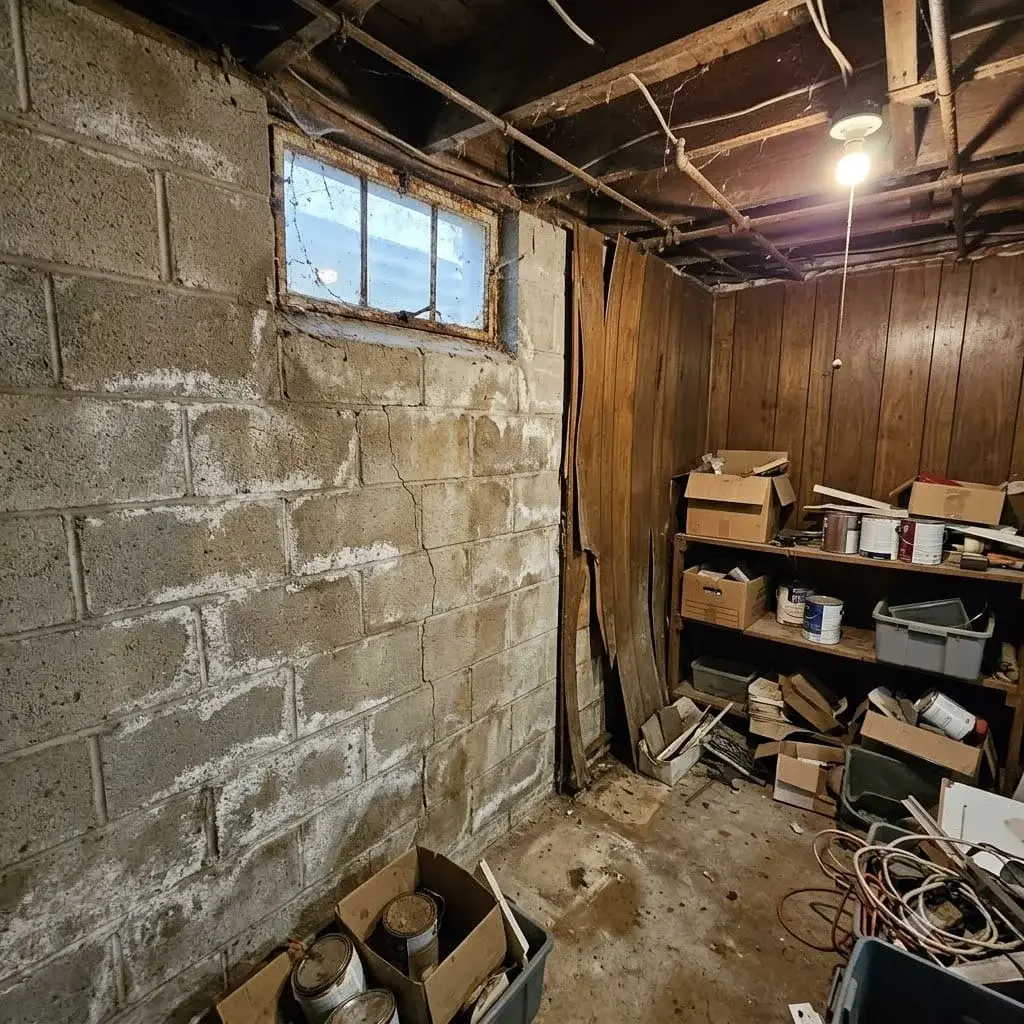
Interior drainage solves the most common Janesville problem, which is water pressure at the floor-wall seam. It costs less, it needs no excavation, and it goes in during any season. In a place where the Afton-Janesville weather station records about 37 inches of snow a year and March crosses freezing nearly every day, a method that works in winter matters. It also handles block walls: weep holes in the bottom course let water inside the block drain into the system. See our page on interior drainage and sump pumps.
When Exterior Is the Right Call
Exterior waterproofing fits when the wall itself is leaking through its face, when the footing drain has failed and the water has to be stopped at the source, or when we can reach the wall easily. It's the bigger job, and it's the one that keeps water from touching the wall at all. A deck, a patio, or a narrow lot can make the dig costly, which is why we check access at the inspection. See our page on exterior basement waterproofing.
When You Need Both, or Repair
Some homes need both. A wall that leaks through its face and floods at the seam can need exterior sealing and interior drainage with a pump. And a wall that has cracked or bowed under pressure needs wall repair as well, because a repair without drainage can move again. The inspection looks at the water, the wall, and the access together.
How We Choose
First, we find where the water enters, inside and outside. Second, we measure the walls for cracks and movement. Third, we check access around the house. Fourth, we pick the method that fits the water and the foundation, and write the plan and price before work begins. We recommend the smaller job when it will do the work. For the cost side, see what basement waterproofing costs in Janesville.
Frequently Asked Questions
Is interior or exterior waterproofing better?
Neither is better in every case, because they solve different problems. Interior drainage manages water that reaches the floor and costs less, with no digging. Exterior waterproofing stops water at the wall and costs more, with excavation. Interior fits most water at the floor-wall seam, and exterior fits walls that leak through their face. An inspection shows which your home needs.
Is exterior waterproofing worth the extra cost?
Exterior waterproofing is worth the extra cost when the wall leaks through its face or a footing drain has failed, because it fixes the source. National cost guides published in 2026 put it at roughly $7,000 to $18,000, compared with roughly $3,000 to $12,000 for interior. For water that only reaches the floor joint, interior drainage does the job for less. We recommend the method the foundation needs.
Can I do both interior and exterior waterproofing?
You can do both, and some homes need both. A wall that leaks through its face needs exterior sealing, and the basement may still need interior drainage and a pump to handle groundwater at the footing. Combining them costs more, so we only recommend both when the inspection shows the water enters both ways.
Does interior waterproofing keep water out of the walls?
Interior waterproofing manages the water that gets in and moves it out, and it doesn't stop water from touching the outside of the wall. Weep holes let water inside block walls drain into the system, which relieves the pressure that pushes water through the wall. If you want the water stopped before it reaches the wall, that's exterior waterproofing.
How do I know which method my home needs?
An inspection tells you, because the choice depends on where the water enters, how the foundation was built, and what's outside the wall. We look at the floor-wall seam, cracks, block joints, window wells, and the soil and access outside. We write the method, the scope, and the price before work begins. Call 123-456-7890 for a free inspection.
Not Sure Which Your Janesville Basement Needs?
Call 123-456-7890 for a free inspection. We'll find where the water comes in and recommend the method the foundation needs. See our page on basement waterproofing in Janesville for how we work.