Janesville has had two major floods in recent memory. In June 2008, the USGS counted Janesville among nine severely damaged southern Wisconsin communities, and the Rock River didn't peak until June 21 at Indianford and Afton. On April 17, 2026, flash flooding hit again, and city figures put the damage above $30 million. The two events flooded basements in different ways, and each needs a different fix.
June 2008: The River Flood
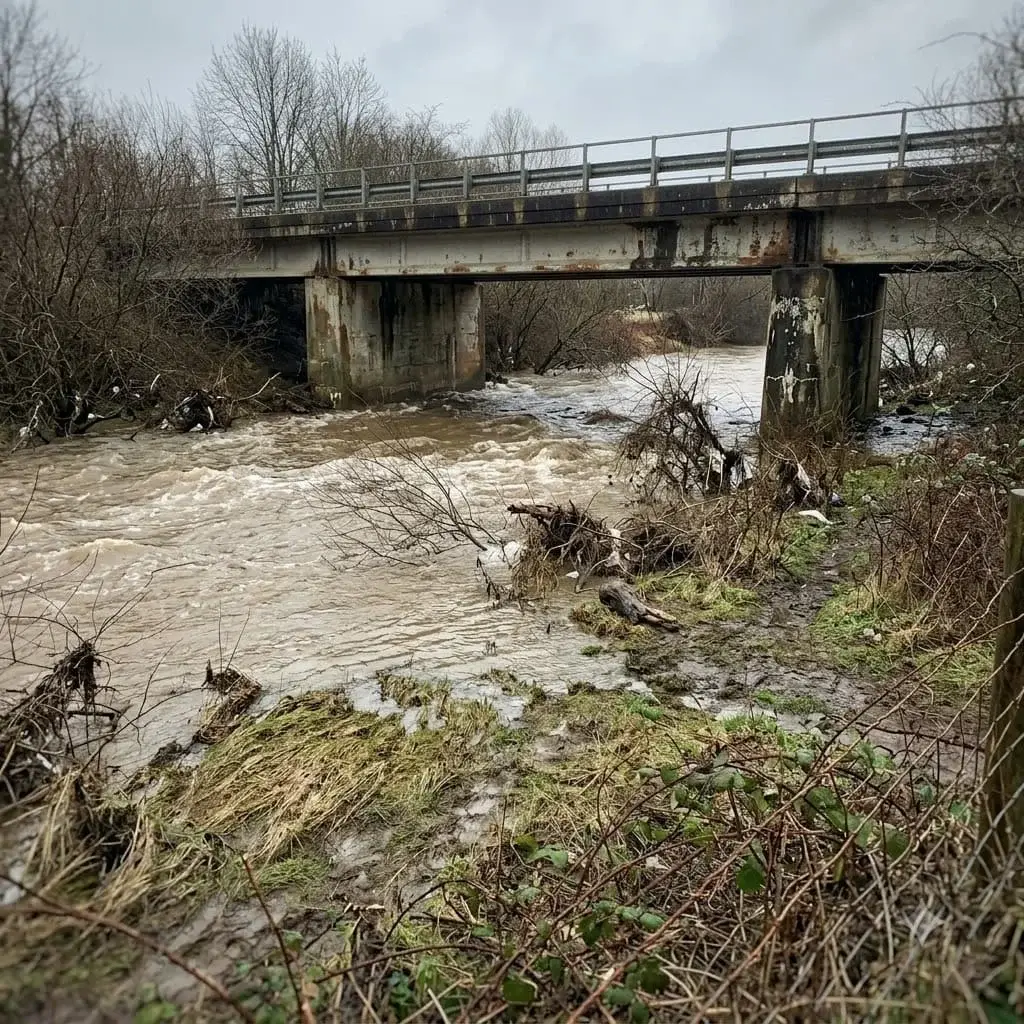
The USGS reported record gage heights and streamflows at 21 streamgages across southern Wisconsin between June 7 and June 21, 2008. Janesville was one of nine communities it listed as severely damaged, along with Jefferson, Fort Atkinson, and Beloit, and the USGS produced flood-peak inundation maps for them. The Rock River peaked late, on June 21 at Indianford and Afton, and flooding at the Afton gage continued into July.
A river flood like that comes up slowly and stays. The water rises over days, floods low-lying property near the river, and keeps groundwater high for weeks afterward. The basement problem is high water outside that has nowhere to go.
April 17, 2026: The Flash Flood
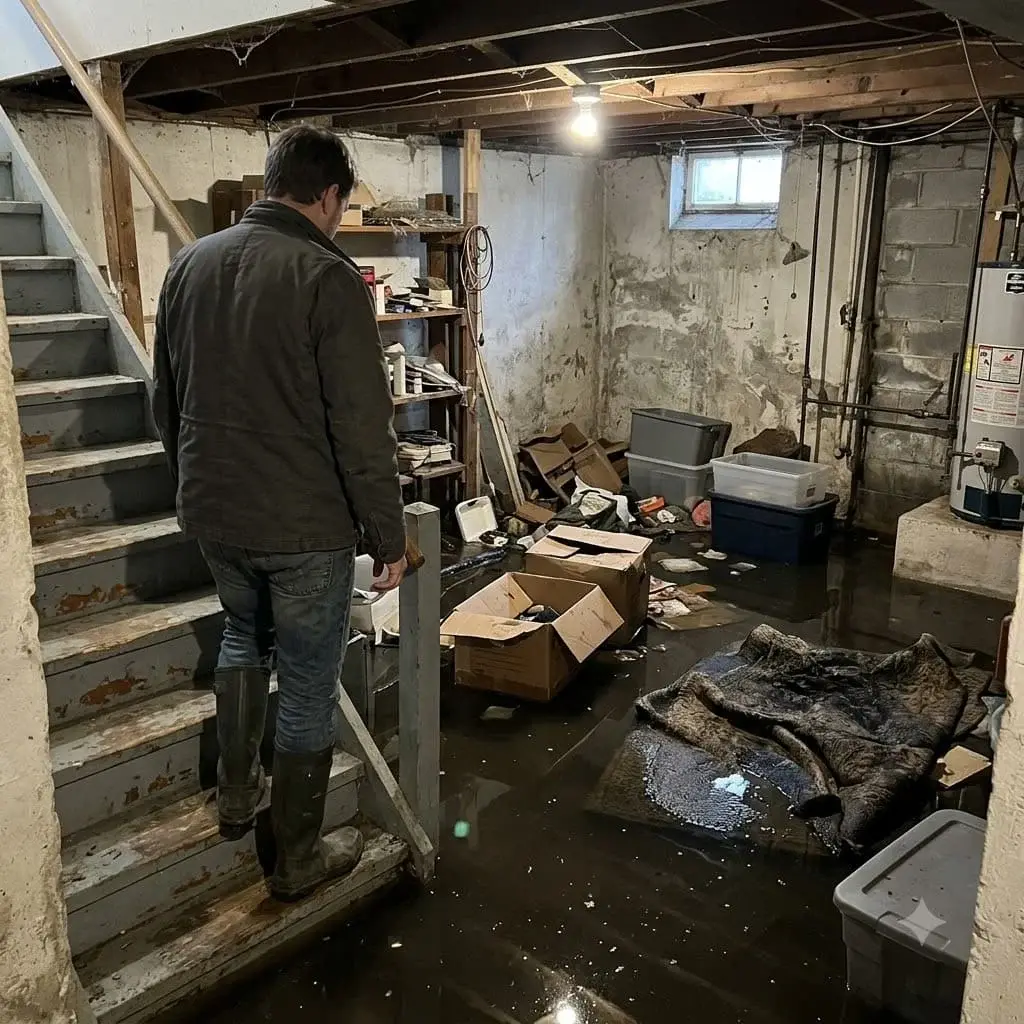
The April 2026 flood was fast. Rock County's sheriff said 911 calls between 5 and 9 p.m. that Friday ran 392% above a typical Friday night, with 724 calls in four hours. Streets flooded, a train derailed after a washout, and the Rock River overflowed its banks. The city said its drinking water and wastewater systems weren't affected. The National Weather Service's review of the storm said flash flooding was particularly severe in the Janesville area, that numerous water rescues occurred where cars were stranded in rapidly rising flood water, and that training thunderstorms brought repeated heavy rainfall atop already saturated soils. According to the Gazette, storm runoff flowed into residents' basements, and cleanup companies worked around the clock for days.
City figures reported by WKOW on May 1, 2026 put the damage above $30 million, including about $26 million in personal property and about $7 million in public property. Heavy rain in a short time overwhelms the ground and the streets before a river rises, so the water that reached basements came from runoff, not only the river.
Rainfall figures for the night depend on the source and the method. The Wisconsin State Climatology Office reported radar-based estimates near 10 inches across the Janesville area, well above the area's two-day 100-year rainfall threshold of 7.44 inches. The state's federal disaster request letter cited 3.62 inches of rain in a single night in Janesville and a countywide range of 4 to 10 inches for April 12 to 18. Radar estimates and single-site measurements differ, and both point to far more rain than the ground and storm drains handle in an ordinary storm.
Three Ways Water Reaches a Janesville Basement
Floods reach a basement by different routes, and the route sets the fix.
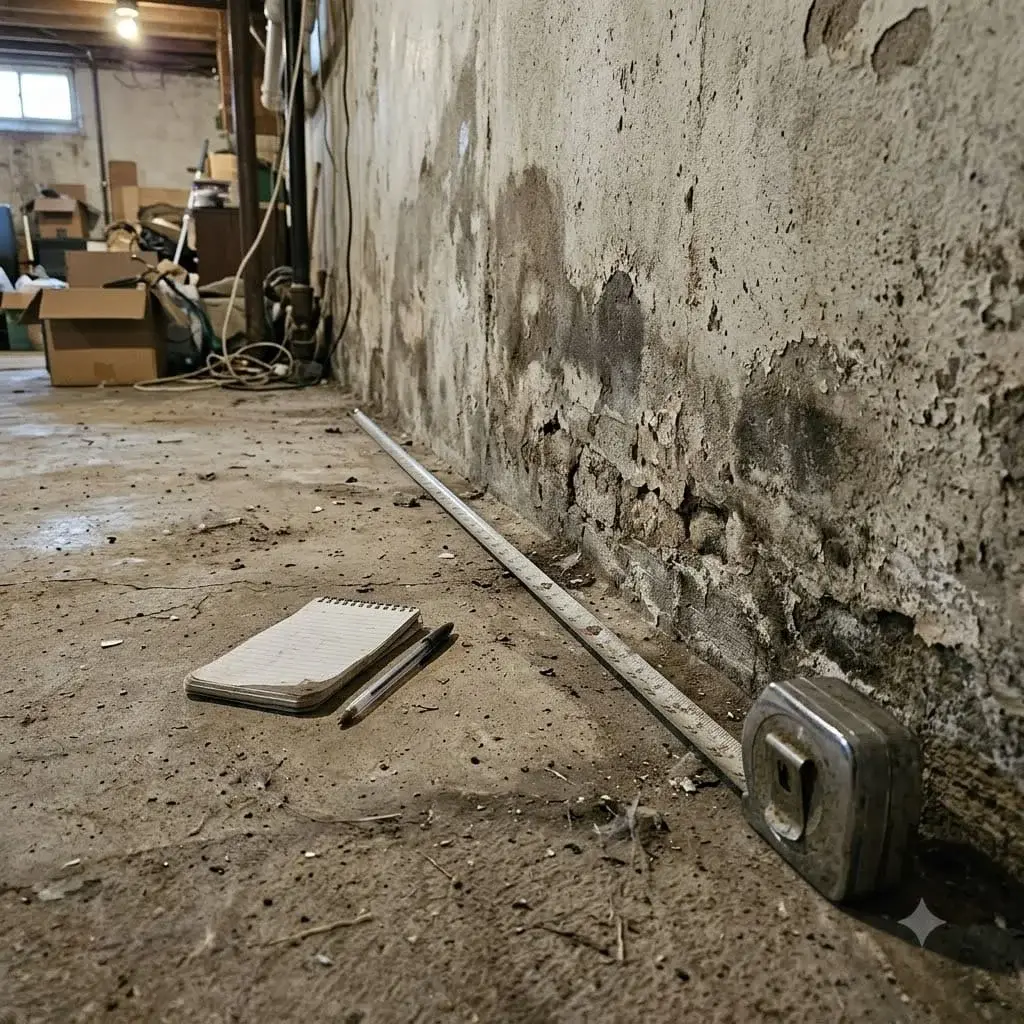
- Groundwater. Saturated soil pushes water through the floor-wall seam, cracks, and block joints. After a river flood, groundwater stays high for weeks. Interior drainage with a sump pump handles it.
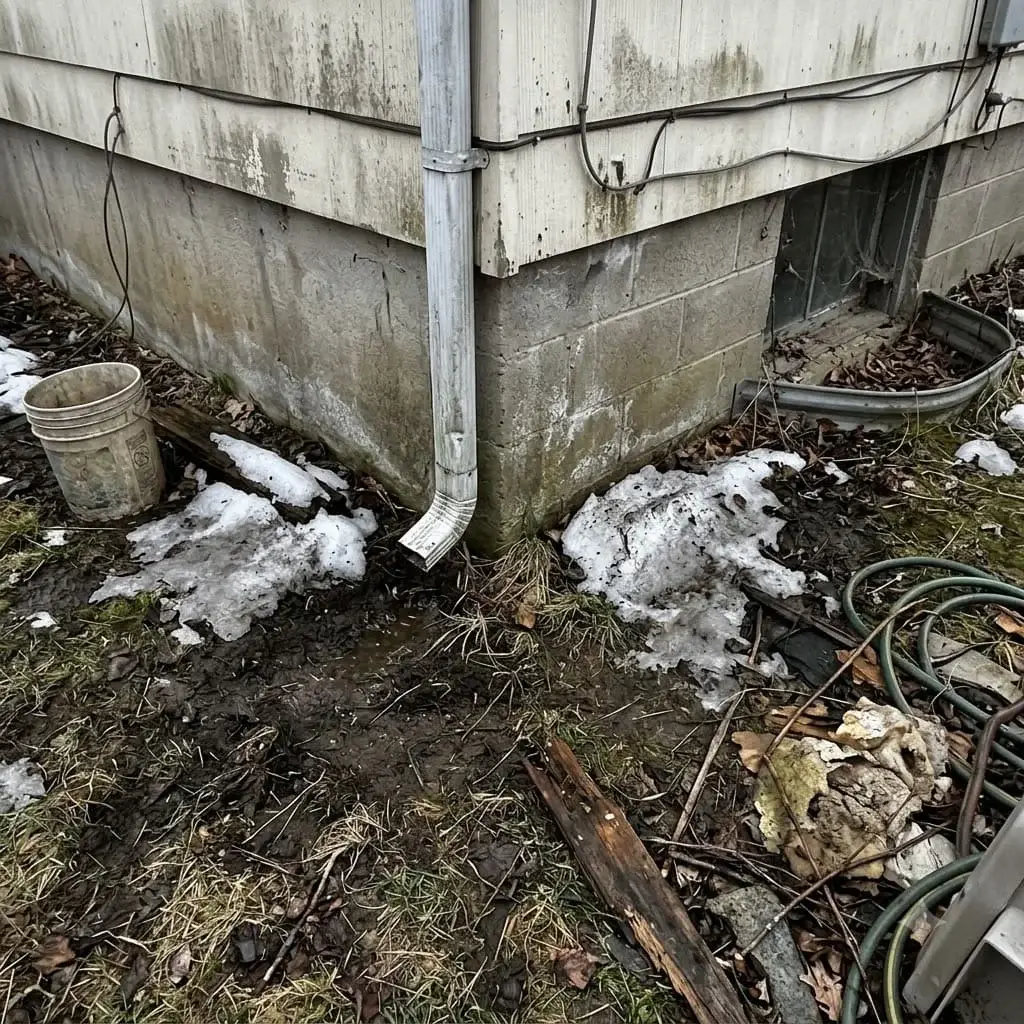
- Surface runoff. Rain that flows toward the house and pours into window wells, door wells, or low entry points. Grading, downspouts, and well drains reduce it.
- Sewer or drain backup. Water pushed up through a floor drain. Drainage under the slab doesn't stop it, and a licensed plumber handles the fix.
A home can take water from more than one route in the same storm. The inspection finds which ones apply.
What Protects a Basement in a Flood Area
A sump pump with a battery backup is the core of it, because floods and storms cut power, and a standard pump stops when the power does. Drainage along the footing gives the water a path to the pump, and weep holes in block walls let water inside the block drain into the system. Outside, downspouts that discharge away from the house and a yard graded away from the foundation lower the load. Walls that leaked through their face or have a failed footing drain may need exterior waterproofing.
Insurance is a separate question. The federal flood insurance program's FloodSmart site states that most homeowners insurance does not cover flood damage, so ask your insurer what your policy covers for groundwater, flood, and sewer backup.
Frequently Asked Questions
Has the Rock River flooded Janesville before?
The Rock River has flooded Janesville before, most recently with the June 2008 floods and the April 2026 flash flood. In June 2008, the USGS counted Janesville among nine severely damaged southern Wisconsin communities, and the river peaked on June 21 at Indianford and Afton. In April 2026, the river overflowed its banks along with flash flooding that sent runoff into basements.
Was my basement flood from the river or from groundwater?
River water reaches a basement mainly in low areas close to the Rock River, while groundwater and storm runoff affect basements across the city. Water that seeps up at the floor-wall seam or through walls points to groundwater pressure. Water pouring in from a window well or door points to surface runoff. Water rising through a floor drain points to a sewer backup. An inspection traces the route.
Does homeowners insurance cover a flooded basement in Janesville?
Most homeowners insurance excludes flood and groundwater, and many policies exclude sewer and drain backup unless you add an endorsement. The federal flood insurance program's FloodSmart site states that most homeowners insurance does not cover flood damage. Coverage differs from policy to policy, so read yours and ask your insurer about groundwater, flood, and sewer backup before the next storm.
Will a sump pump protect my basement in a flash flood?
A sump pump with a battery backup protects a basement from the groundwater that builds around a foundation, and the backup keeps it running through a power outage. A pump has a limit, and a flash flood that sends water straight into a window well or door can exceed it. Good drainage, a properly sized pump, and grading that moves surface water away all work together.
What should I do if my basement flooded in the April 2026 storm?
Dry the basement quickly, because mold can start within 24 to 48 hours, and have the source of the water traced so it doesn't repeat. We cover the steps in our guide to the first 24 hours after a basement floods. Then call 123-456-7890 for an inspection of where the water entered and a written price for the fix.
Flooded in Janesville? Call for an Inspection
If your Janesville basement took water in the April 2026 flood or in a storm since, call 123-456-7890 for a free inspection. We'll trace the route the water took and write up the fix. See our page on basement waterproofing in Janesville and our full service area.