Janesville gets about 37 inches of snow in an average year, and the Afton-Janesville weather station records most of it between December and February, about 28.6 inches in those three months. Then March arrives, and the ground starts to thaw. That's when a basement that stayed dry all winter starts to leak. Here's what the weather data shows and what happens to your foundation.
What the Weather Station Shows
The NOAA 1991-2020 climate normals for the Afton-Janesville weather station lay out the winter-to-spring pattern.
| Month | Avg high | Avg low | Precipitation | Snowfall |
|---|---|---|---|---|
| December | 33.5°F | 18.1°F | 1.90 in | 7.7 in |
| January | 28.3°F | 11.6°F | 1.63 in | 10.8 in |
| February | 32.4°F | 14.7°F | 1.61 in | 10.1 in |
| March | 44.6°F | 25.4°F | 2.06 in | 4.1 in |
| April | 57.9°F | 36.1°F | 3.57 in | 1.3 in |
| May | 69.9°F | 48.0°F | 4.09 in | 0.0 in |
| June | 79.9°F | 58.0°F | 4.99 in | 0.0 in |
Three things stand out. First, the snow stacks up through the cold months, about 28.6 inches from December through February. Second, March averages a high of 44.6°F and a low of 25.4°F, so most days cross freezing. Third, precipitation climbs through the spring, from about 2 inches in March to about 5 inches in June, and from March through June the total is about 14.7 inches.
What Happens When the Snow Melts
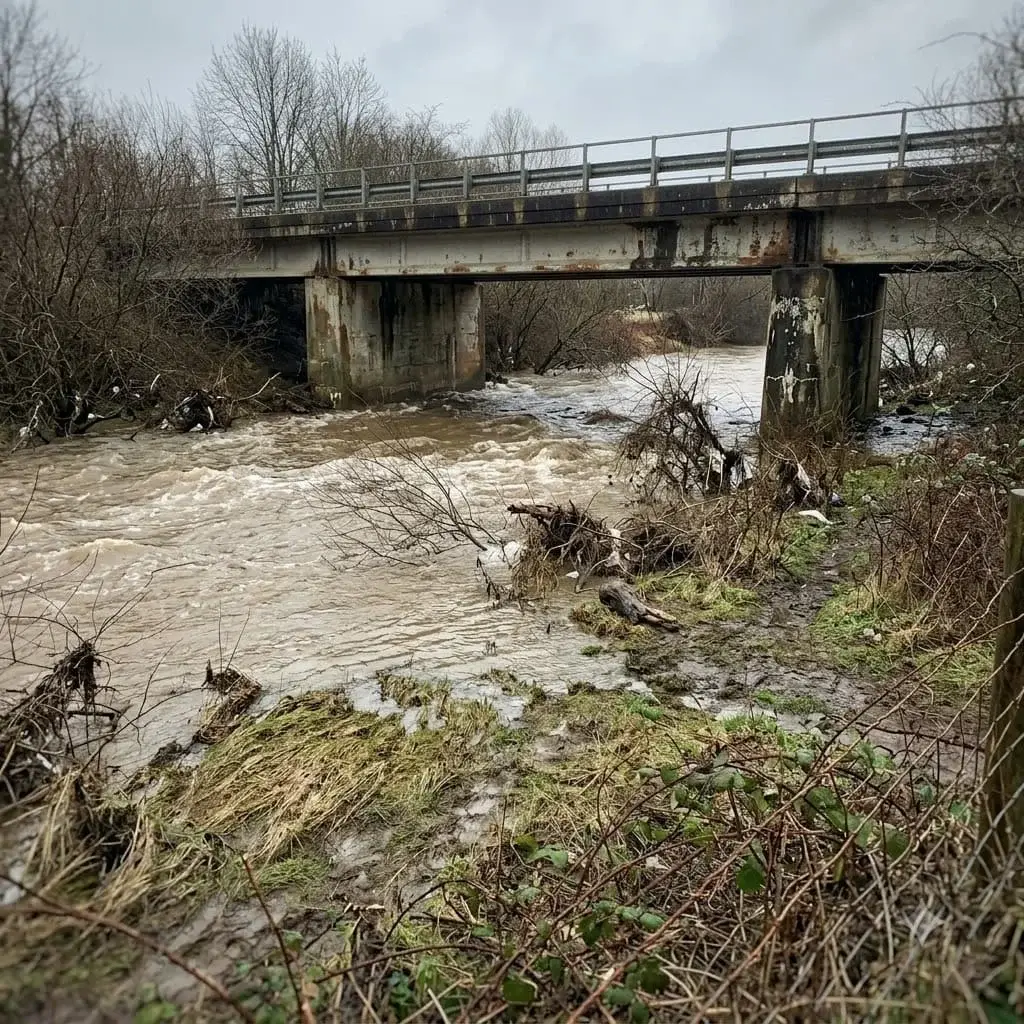
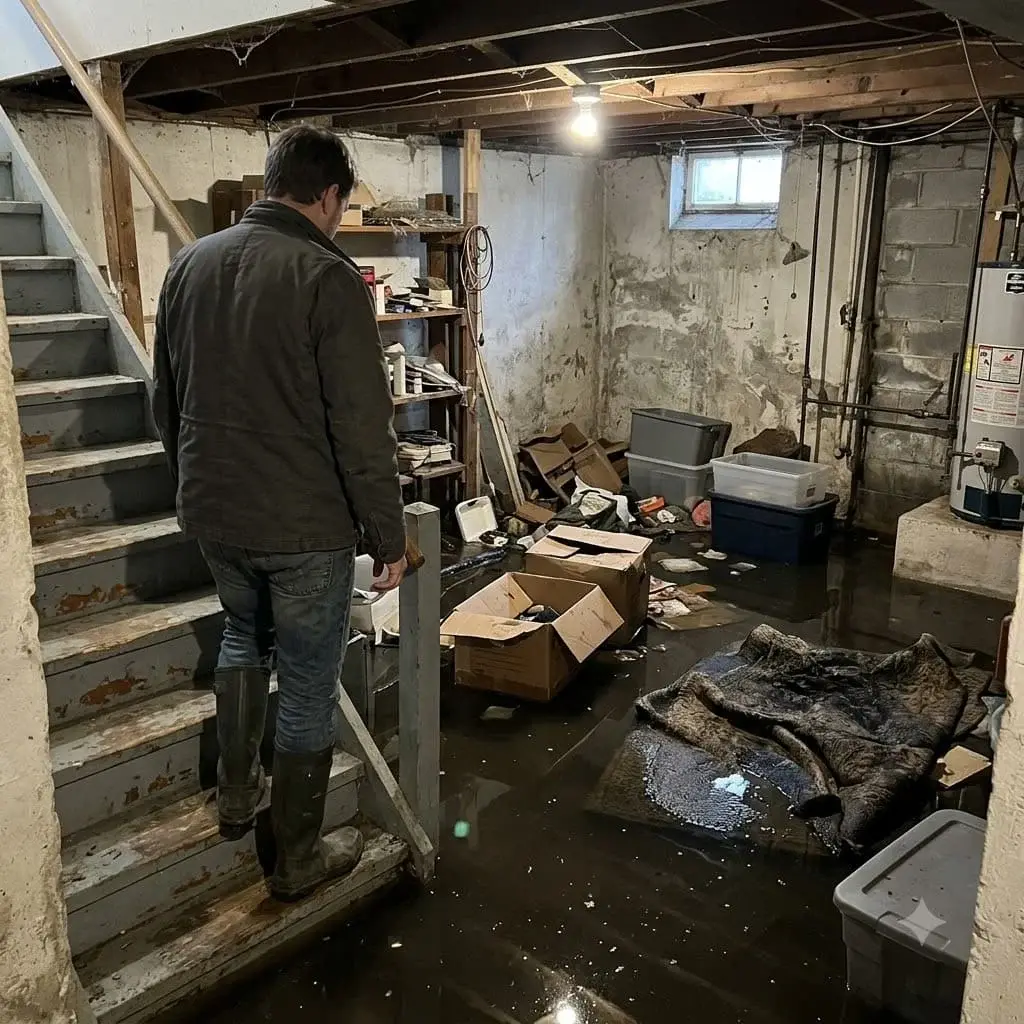
Melting snow turns into water at the same time the ground can't take it. In late winter the soil near the surface can still be frozen, and frozen soil doesn't absorb water well. The melt runs along the surface toward the foundation, soaks the ground that has thawed, and builds pressure against the wall. By April, rain joins the melt. A basement that sat dry through January can take on water in March because the ground around it is carrying the whole winter's snow plus spring rain.
What Freeze-Thaw Does to Walls
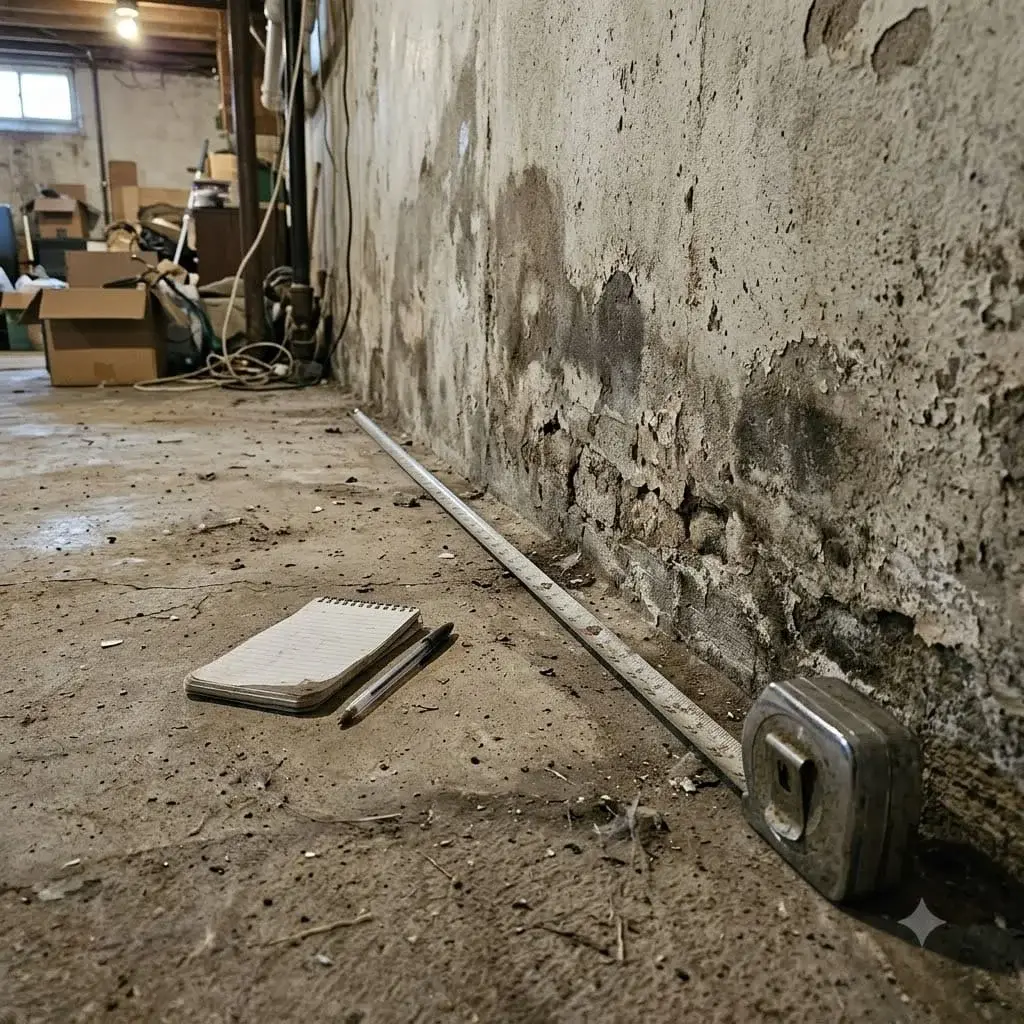
Freeze-thaw damage works in a cycle. First, water works into a hairline crack or mortar joint. Second, a cold night freezes it, and ice takes up more room than water, so it pushes the crack wider. Third, the daytime thaw lets in more water. Fourth, the cycle repeats. With March crossing freezing almost every day, a crack gets many rounds of it in one month. A hairline crack in fall is often a steady leak by spring.
Frozen ground adds a second force. Soil that freezes against a foundation wall can push on it, and that pressure adds to what the water is already doing. For more on cracks and bowing, see our page on basement wall repair.
What to Do Before and During Snowmelt
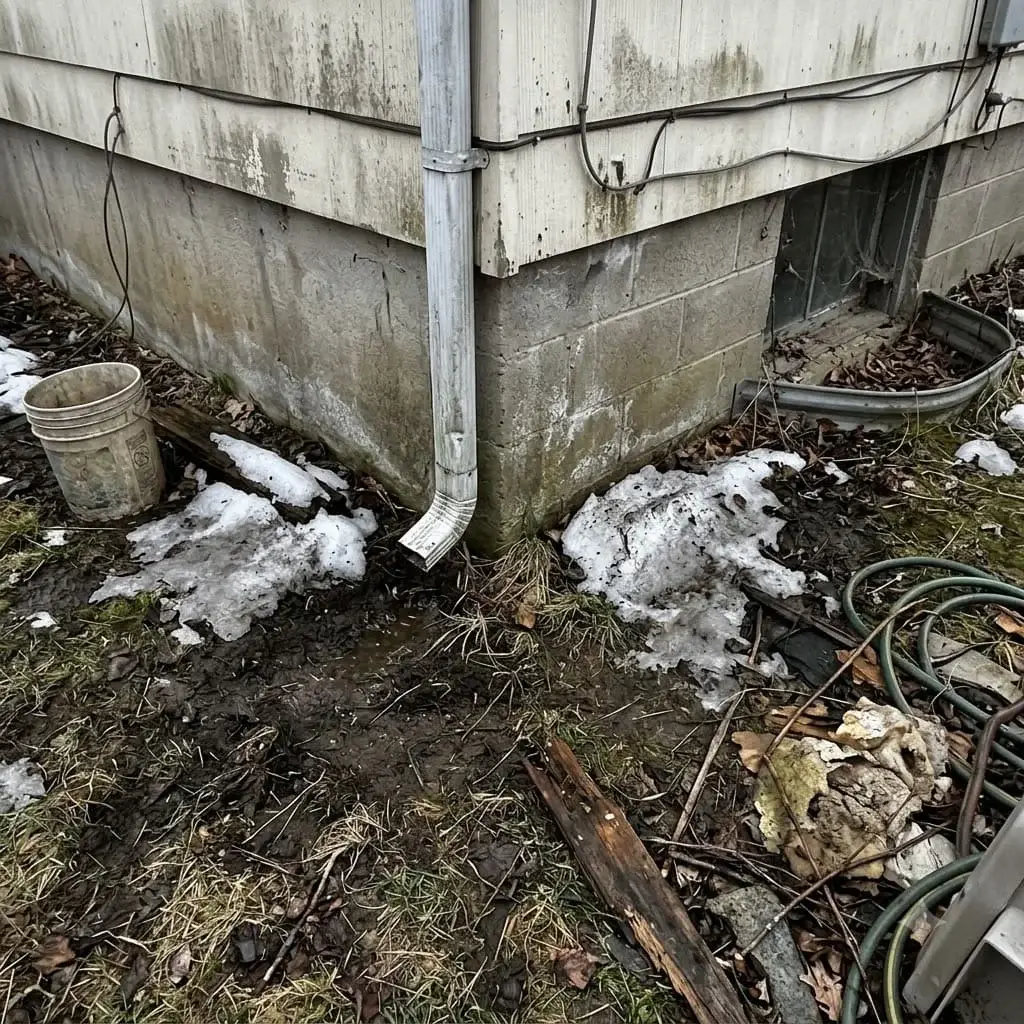
Before the thaw, clear snow from around the foundation, keep downspouts discharging away from the house, and check that your sump pump starts when you pour a bucket of water into the basin. A pump should have a battery backup, because spring storms can cut the power. During the thaw, watch the base of the walls and the floor-wall seam, and note where any water appears. If water shows up, a sump pump and interior drainage system collects it and pumps it out, and it can be installed in any season. Our guide to why basements leak after rain covers how to trace the entry point.
Frequently Asked Questions
Why does my basement leak in spring and not in winter?
A basement leaks in spring because snowmelt and rain add water to the ground just as the soil thaws and loses its ability to hold the load. Through winter, frozen ground and snow cover keep a lot of the water locked in place. In Janesville, March through June brings about 14.7 inches of precipitation, and the melt of about 28.6 inches of winter snow arrives with it. The pressure peaks in spring.
Does freezing and thawing crack basement walls?
Freezing and thawing widens existing cracks and mortar joints. Water in a crack freezes and expands, and the ice pushes the crack wider. Each thaw lets in more water, and the next freeze opens it further. March in Janesville averages a high near 45°F and a low near 25°F, so walls go through that cycle many times in a month. Sealing a crack before winter prevents the cycle from starting.
Is frozen ground bad for basement drainage?
Frozen ground blocks water from soaking in, so snowmelt and rain run along the surface toward the foundation. If the ground nearest the house is frozen while the snow above it melts, the water has nowhere to go and builds against the wall. Keeping snow cleared from the foundation and downspouts discharging well away from the house reduces the load.
Should I wait until spring to waterproof my basement?
You don't need to wait. Interior drainage and a sump pump install from inside the basement, and the work doesn't depend on thawed ground. Exterior waterproofing is easier when the ground is soft, but interior work goes in any season. Waiting for spring means living with the leak through the next thaw. Call 123-456-7890 for an inspection and a written price.
How can I tell if my basement leak is from snowmelt?
A leak that appears in March or April, follows warm spells or rain on snow, and shows up at the base of the wall or the floor-wall seam is a snowmelt leak. It often fades as the ground drains and returns the next thaw. The same entry points are in use each time, so tracing them now means fixing them before the next wet spring.
Dealing With Spring Leaks in Janesville?
If your Janesville basement leaks during snowmelt, call 123-456-7890 for a free inspection. We'll trace where the water comes in and write up the fix. See our page on basement waterproofing in Janesville for how we work.