A Janesville basement leaks after rain because water collects in the ground around the foundation and pushes through the weakest point in the wall or floor. The Afton-Janesville weather station records about 37 inches of precipitation in an average year, and March through June alone adds up to about 14.7 inches. Here's how the water gets in and how to tell which path it's using.
The Short Answer: Water Pressure
Rain that soaks into the ground has to go somewhere. When the soil around a foundation fills with water, the water pushes against the basement wall and up under the floor. That pressure forces water through any opening it finds, even a hairline crack. A basement doesn't leak because the wall has a hole the size of the leak. It leaks because the pressure never lets up until the ground drains.
That's why surface sealers and waterproofing paint fail. They sit on the inside face of the wall, and the pressure behind them keeps pushing. The lasting fix lowers the pressure or gives the water a path out.
Where the Water Gets In
Water in a Janesville basement usually comes in at one of five places.
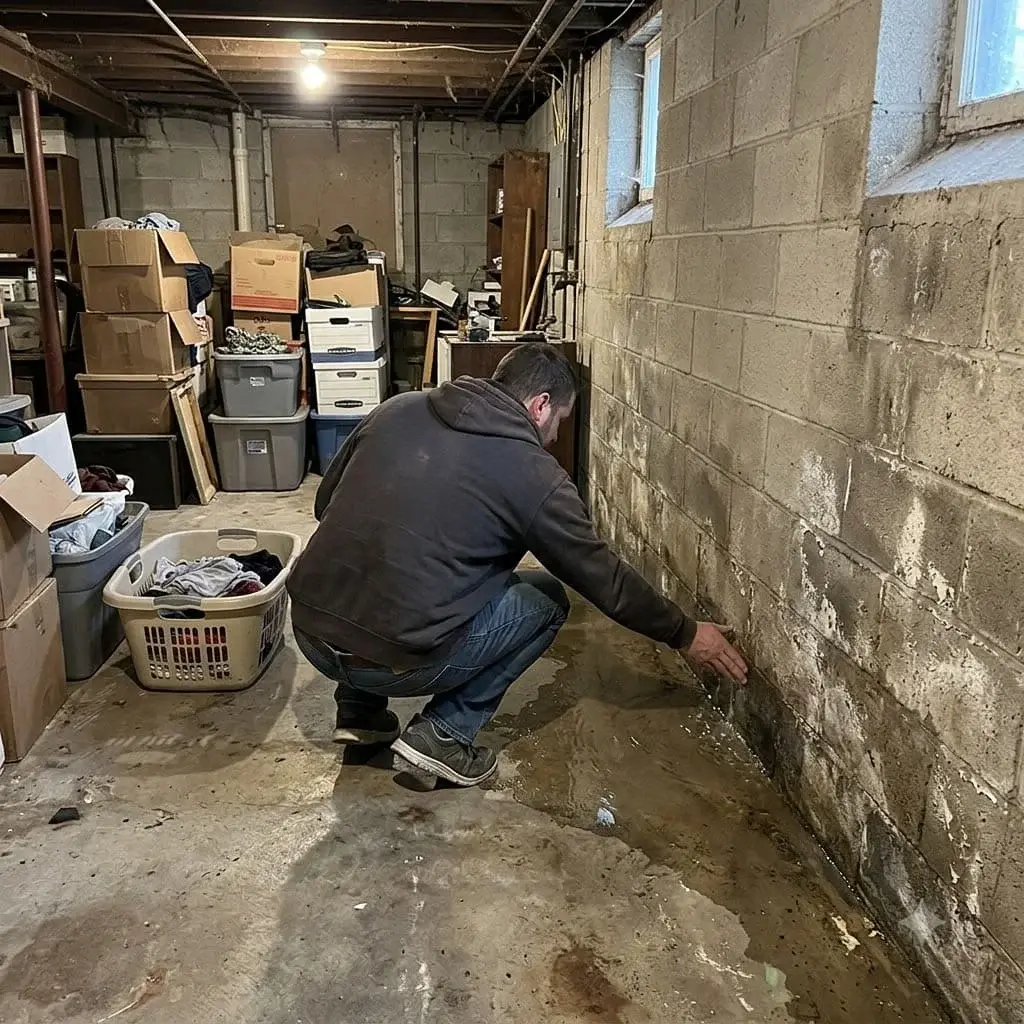
- The floor-wall seam. Where the floor slab meets the wall, there's a joint that isn't sealed. Water rising under the floor shows up here first.
- Cracks in the wall or floor. A vertical, horizontal, or stair-step crack gives pressurized water an opening.
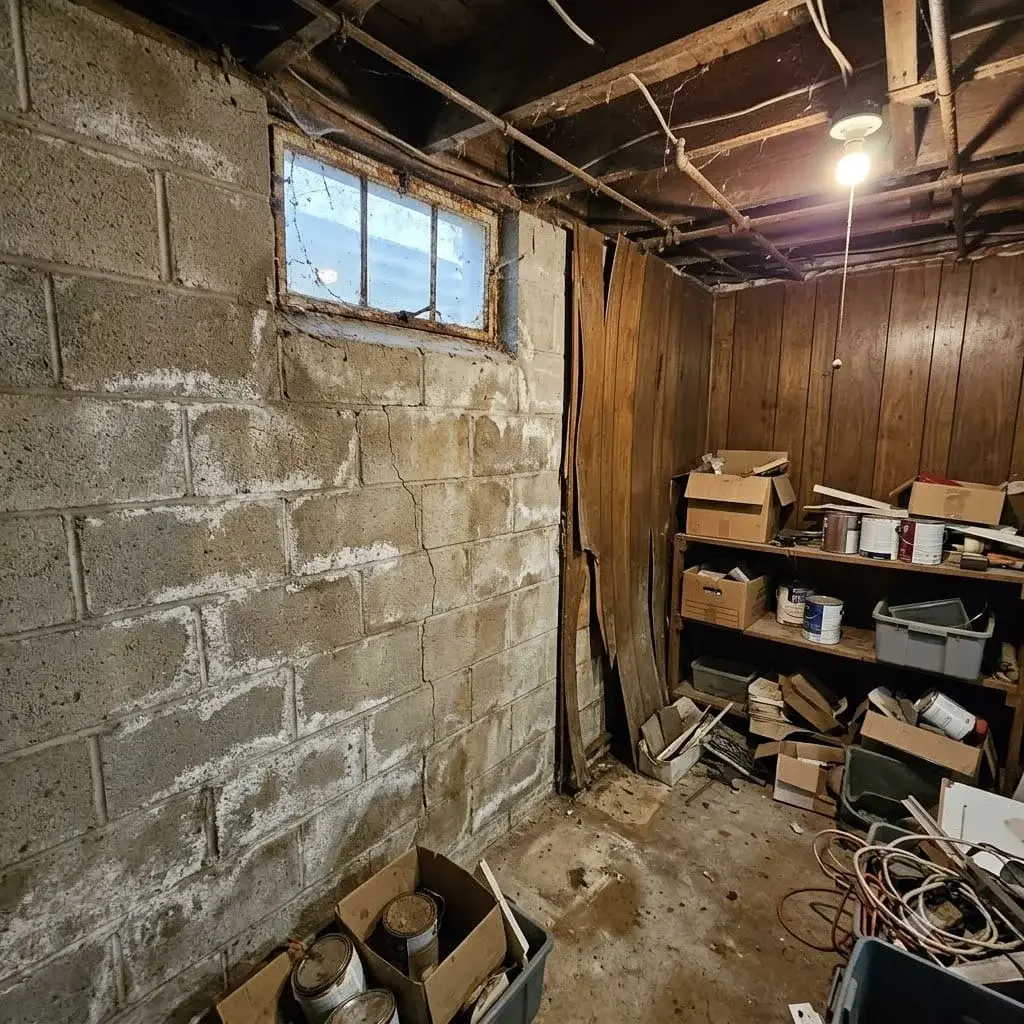
- Mortar joints in block walls. Block is porous and hollow, and water seeps through the joints and the face of the block.
- Window wells. A well that fills with rain can leak through the window or the wall around it.
- Floor drains and sewer lines. A backup through a floor drain is a plumbing problem, not groundwater, and drainage under the slab doesn't stop it.
The pattern tells you the source. Water at the base of a wall after rain points to groundwater pressure. Water coming up through a floor drain points to a backup.
Why Janesville Basements Take It Hard
The weather loads the ground for much of the year. Snow falls from November into April, and the wet stretch of March through June adds about 14.7 inches of precipitation, with June the wettest month at close to 5 inches. Melting snow and spring rain arrive together, and the ground can't absorb it all. The USGS reports that glacial deposits cover most of Rock County and that the county's ground water is recharged mainly by local precipitation, so local rain and snowmelt feed the ground water beneath the county.
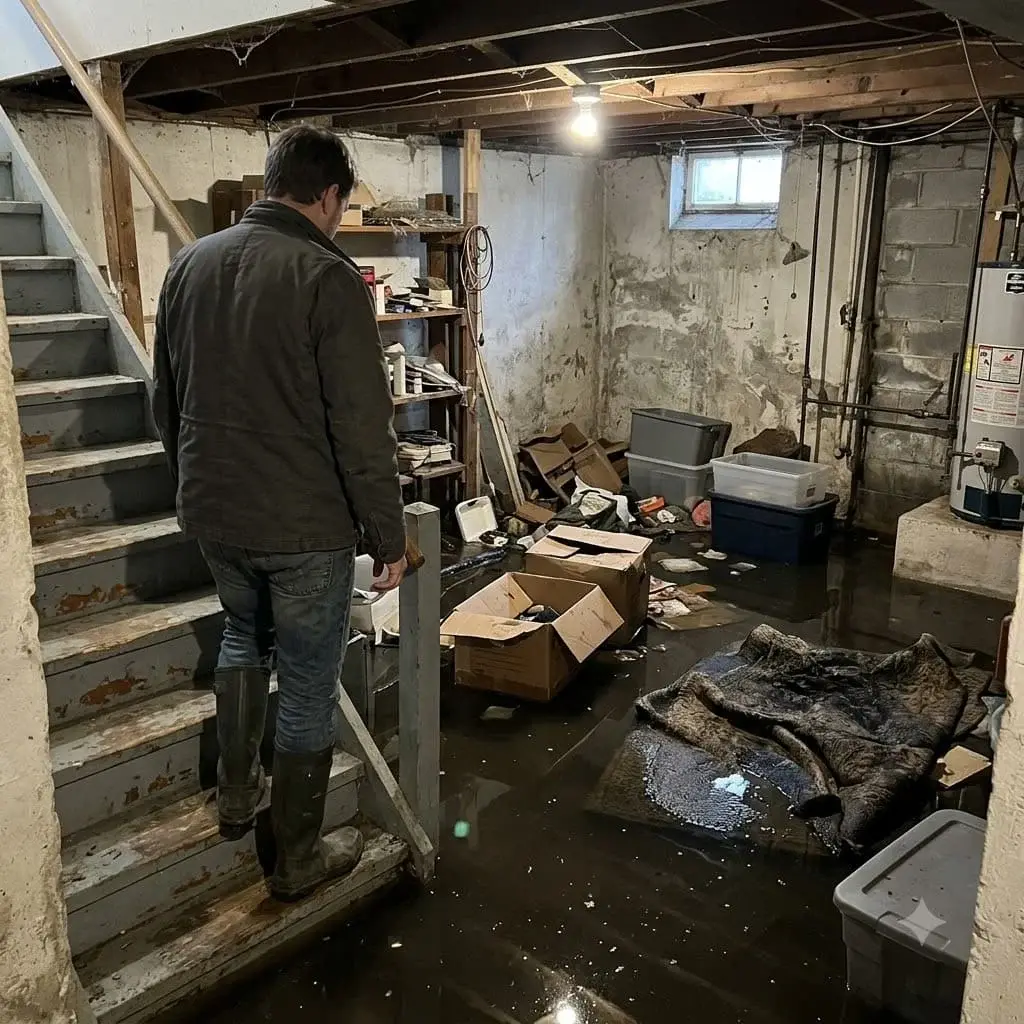
Storms add a sudden load. On April 17, 2026, flash flooding hit Janesville and storm runoff flowed into basements. The National Weather Service said training thunderstorms dropped repeated heavy rain on already saturated soils, and city figures put the damage above $30 million. A basement that stays dry through ordinary rain can still take water when a storm dumps more than the ground can handle.
The age of the housing matters too. About 28% of Janesville's occupied homes were built between 1960 and 1979, and about 27% before 1960, so many basements went in before modern drainage. For the full picture of what we see in those homes, read our guide to basements in Janesville's 1960s and 1970s homes.
What Fixes a Basement That Leaks After Rain
The fix depends on where the water comes in.
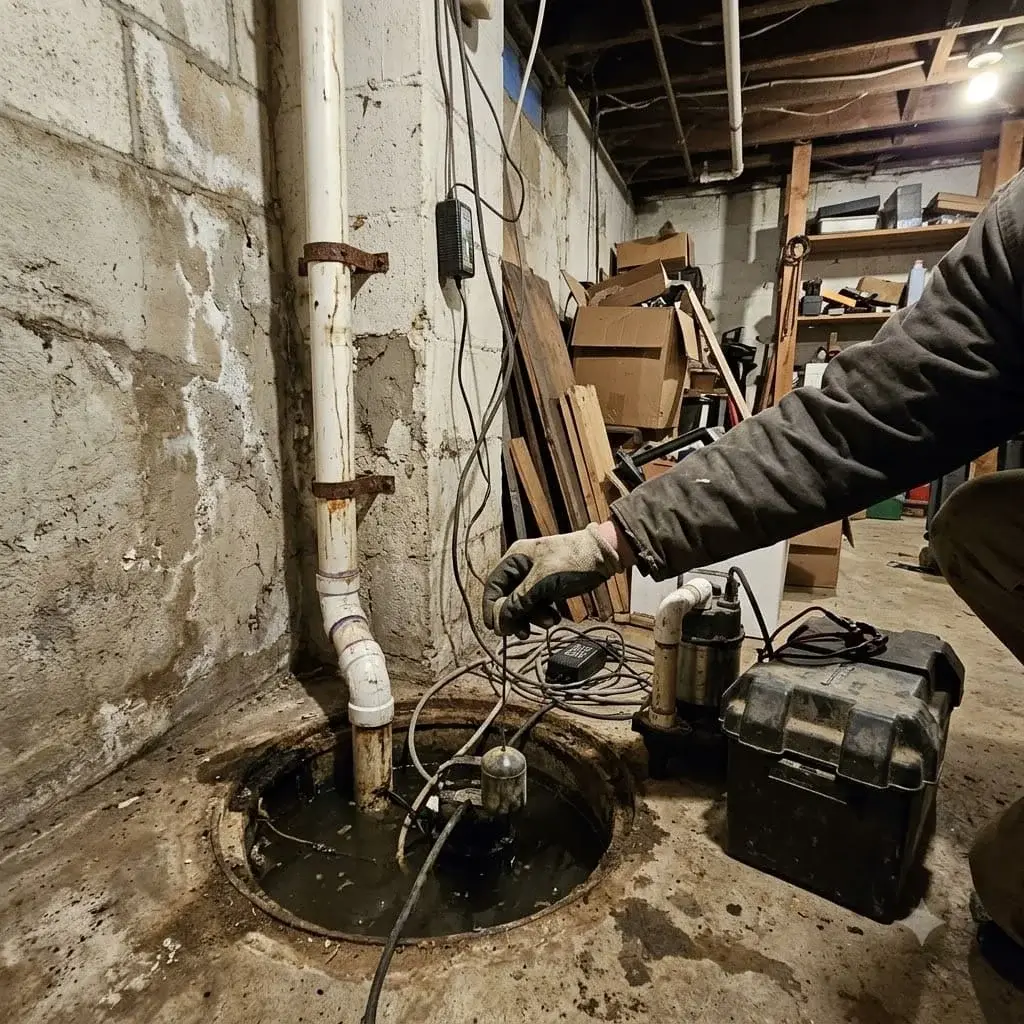
First, for water at the floor-wall seam or through the base of block walls, interior drainage with a sump pump collects the water and pumps it outside. Second, for water that comes through the face of the wall, or when the original footing drain has failed, exterior waterproofing stops the water at the wall. Third, for cracks and walls that have moved, wall repair stabilizes the wall. Fourth, for window wells and roof water, grading, downspouts, and well drains reduce the load. An inspection finds which of these your basement needs.
Frequently Asked Questions
Why does my basement leak only when it rains hard?
A basement that leaks only in heavy rain is taking on water when the ground around the foundation saturates. Light rain soaks in without building pressure, but a heavy rain or a stretch of wet weather fills the soil and pushes water through the floor-wall seam, cracks, or block joints. The leak is a sign the foundation has an entry point, and it tends to get worse each season.
Can I seal a leaking basement wall with paint or sealer?
Paint and sealer rarely stop a leak, because they sit on the inside of the wall while the water pressure builds on the outside. The pressure pushes the coating off the wall or finds another way in. A lasting fix removes the pressure with drainage and a sump pump, or seals the wall from the outside. Paint can finish a repaired wall, but it doesn't make a leaking wall watertight.
Is a leaking basement a sign of foundation damage?
A leaking basement isn't always foundation damage, but it can be. Most leaks come from water pressure forcing its way through cracks, joints, and the floor-wall seam. Horizontal or stair-step cracks, bowing walls, and gaps at the corners signal that the wall is moving. We inspect the walls and tell you whether the leak needs drainage, wall repair, or both.
Does my sump pump need to run for my basement to stay dry?
A sump pump runs when water rises in the basin, and in a wet spring that can mean running often. A pump that never runs may have nothing to pump, or it may be stuck or unplugged. Test it by pouring a bucket of water into the basin and watching it start. A pump should have a battery backup, because storms that flood basements can cut the power.
Who do I call about a basement that leaks after rain?
Call a basement waterproofing professional for an inspection that traces where the water comes in. Look for one who inspects inside and outside, names the method in writing, and sets the price before work begins. We do that for Janesville and Rock County homes. Call 123-456-7890 for a free estimate.
Leaking After Rain? Call for an Inspection
If your Janesville basement leaks after rain, call 123-456-7890 for a free inspection. We'll trace where the water comes in and write up the fix. See our page on basement waterproofing in Janesville for how we work.