A sump pump fails at the worst time, which is during the storm that fills the basin fastest. Janesville sees about 37 inches of precipitation a year at the Afton-Janesville weather station, and March through June delivers about 14.7 inches of it. The pump is the part of a drainage system that everything else depends on. Here is why pumps fail, how to test one, and why a battery backup is the addition that matters most.
Why Sump Pumps Fail
Sump pumps fail for a short list of reasons.
- Power loss. The storm that floods a basement cuts the power, and a standard pump stops with it.
- A stuck float. The float switch tells the pump when to run, and a float jammed against the basin wall never starts it.
- A clogged intake or discharge. Silt and debris block the intake, and a discharge line clogs or freezes.
- An undersized pump. A pump too small for the water keeps up in ordinary rain and falls behind in a storm.
- Wear. Pumps wear out, and one that has run through several wet springs fails without warning.
Power failure is the one people do not plan for. The April 17, 2026 flash flood sent storm runoff into Janesville basements, and a pump with no backup stops the moment the power does.
Why Janesville Pumps Work Hard
Janesville pumps work hard because snowmelt and rain arrive together. The Afton-Janesville weather station records about 37 inches of precipitation and about 37 inches of snow in an average year, and March through June brings about 14.7 inches of precipitation. Spring pumps cycle constantly through that stretch.
A January average low near 12°F adds the other problem. A discharge line that is not pitched and routed to drain freezes, and a frozen line turns a working pump into a useless one. A pump that runs hard in spring and sits idle through a frozen winter needs a test before the wet season starts. For the weather side, read this guide to spring snowmelt and freeze-thaw.
How to Test Your Sump Pump
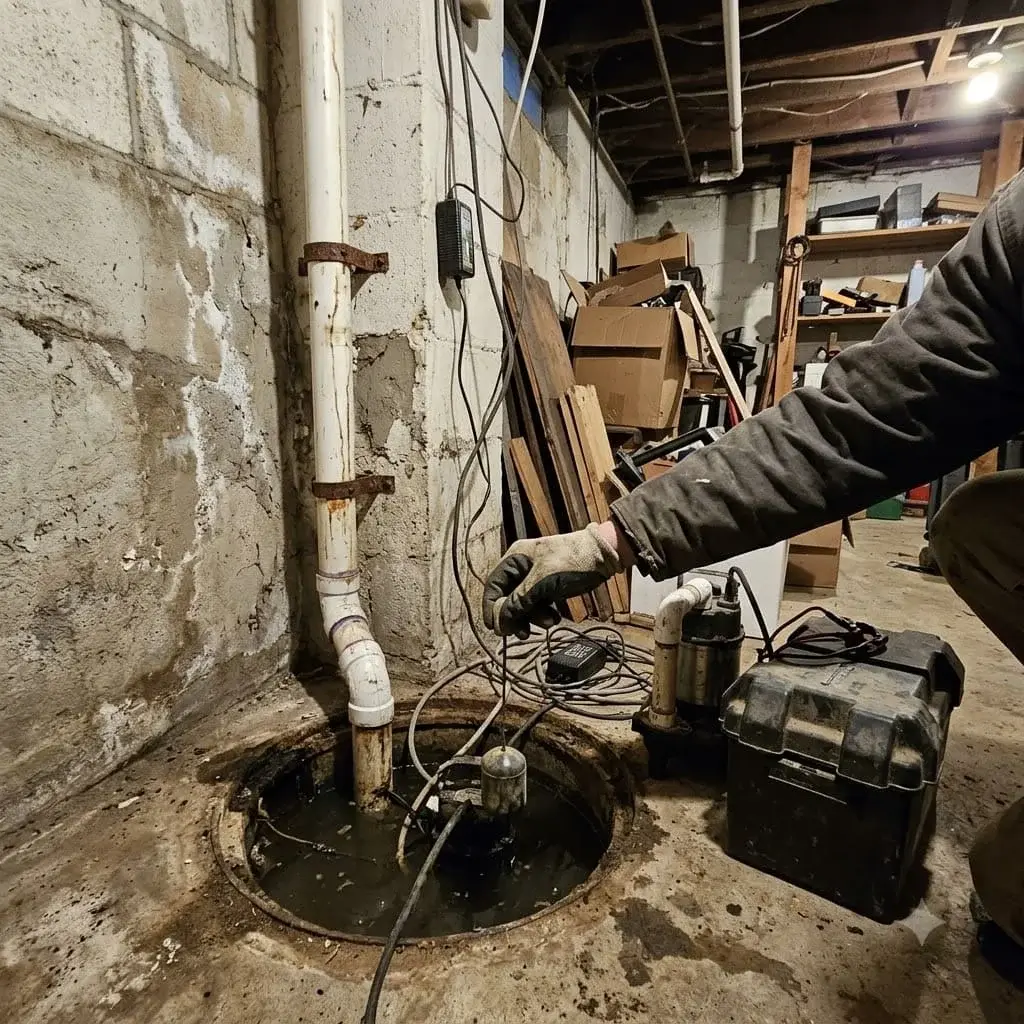
Testing a sump pump takes about five minutes. First, check that the pump is plugged in and the outlet works. Second, pour a bucket of water into the basin until the float rises. Third, watch that the pump starts, empties the basin, and shuts off on its own. Fourth, walk outside and confirm the discharge line pushes the water out and away from the house.
Run the test before spring and after any long dry spell. A pump that does not start, or water that does not leave the basin, means the system needs service before the next storm.
What a Battery Backup Does
A battery backup is a second pump on its own battery that takes over when the power goes out or the main pump fails. It keeps the basin emptying through the storm and the outage, which is exactly the window when a basement floods.
A backup does not replace maintenance. The battery needs checking, and the second pump needs the same bucket test as the first.
When It's Time to Upgrade the System
A pump that runs constantly, never runs, or fails a test points to a system that is undersized or failing. A pump running all the time shows a lot of water reaching the foundation, and a properly sized pump fed by interior drainage along the footing handles that better than a single pit in the corner.
A pump sitting above a drain that has silted up needs more than a replacement pump. The basin, the pump, the discharge, and the drainage all get inspected together. Call 608-740-5923 to reach a local provider.
Frequently Asked Questions
Why did my sump pump stop working during a storm?
A sump pump stops in a storm because the power went out, the float stuck, the intake or discharge clogged, or the pump could not keep up with the inflow. Power loss is the most common cause during heavy storms, because the same weather that floods a basement brings down the lines. A battery backup keeps the basin emptying when the main pump has no power.
How do I test my sump pump?
Pour a bucket of water into the sump basin until the float rises, then watch the pump start, empty the basin, and shut off. Check that the discharge line pushes the water outside and away from the house. A pump that does not start, or water that does not leave, needs service. Test before spring and after any long dry spell, and test the battery backup the same way.
Do I need a battery backup sump pump?
A battery backup is the most important addition to a sump system, because the storms that flood basements cut the power, and a standard pump stops when the power does. The backup runs on its own battery and keeps pumping until power returns. For a Janesville basement that takes on water during storms and spring melt, it belongs in the written scope rather than added later.
Why does my sump pump run constantly?
A sump pump that runs constantly is moving a lot of water, because the ground around the foundation is saturated or the drainage is not keeping up. It also points to a stuck float or a discharge line that sends water back toward the house. Heavy spring melt in Janesville makes a pump run for days at a stretch. A pump that never rests needs the pump and the water source inspected together.
How often should a sump pump be replaced?
A sump pump wears by hours of running rather than by calendar age, so a pump in a wet Janesville basement that cycles through every spring melt reaches the end of its life sooner than one that rarely starts. An annual bucket test before the wet season shows whether the float, the motor, and the discharge still work together. A pump that fails that test gets replaced before the next storm rather than during it.
Sump Pump Not Keeping Up?
If a Janesville sump pump has failed, runs constantly, or has no battery backup, call 608-740-5923 to reach a local provider who can check the pump, the discharge, and the drainage. See the page on basement waterproofing in Janesville for how the methods work.